Wednesday, April 19, 2023

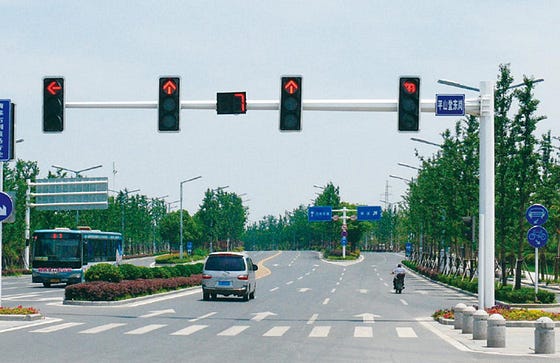
China's Real-Time Traffic Light Display on Navigation Apps: The Technology Behind It

The world of technology always amazes us with its continuous innovations and advancements. One such innovative feature recently added to the navigation apps in China is the real-time display of traffic light status. This feature displays the current status of the traffic light and shows the countdown to the following light change, making it easier for drivers to plan their driving accordingly. This feature has left many users wondering about the technology behind it. This article explores the different possibilities that could have led to the development of this feature.

The Mysterious Technology Behind the Real-Time Traffic Light Display

Many speculations exist about the technology behind navigation apps' real-time traffic light display. Some people believe that it is based on big data analytics, where the app calculates the location, speed, and driving conditions of the vehicles to predict the status of the traffic light. This approach is said to become more accurate as vehicles increase. However, the accuracy may decrease in rural areas with fewer vehicles.

Others speculate that the technology uses the Beidou Navigation Satellite System to synchronize the light traffic timings with the satellite time. This would require the traffic control system to be connected to the satellite system, which seems highly unlikely.

Another possibility is that the navigation app companies manually collect data on the traffic lights' behaviour at different intersections and add this information to their app. Given a large number of traffic lights in China, this approach would be highly inefficient.

Finally, some believe that the traffic lights communicate with each other through wireless signals, and the navigation apps read these signals to display the traffic light status on the phone.

After researching online, it is clear there is yet to be a definitive answer to the technology behind this feature. The app developers are intentionally vague about how they implement the technology to create an air of mystery around it, which can help market the part to the public. However, some information has surfaced on how this feature works.

The Technology Revealed: Connection to Traffic Signal Information Platform

While the app developers need to be more specific about the technology, the real-time traffic light display technology is more mysterious than it seems. The most likely explanation is that the navigation apps are connected to the Traffic Signal Information Platform operated by the traffic control department.

For example, in a joint venture between the Shandong Yantai Traffic Police and the navigation app X-Map, the app reads and collates the data from 235 intersections' traffic signals to provide drivers with real-time traffic light information. Therefore, the app can accurately display the traffic light status based on the data obtained from the traffic control department.

The traffic signal information platform is only available at some intersections. Some hubs will need real-time traffic light information. However, this feature is still impressive, given that the app can display the traffic light status by connecting to the traffic control department's signal information platform.

The Truth Behind the Mysterious Technology: A Marketing Ploy

The marketing tactics used to promote the real-time traffic light display feature have led the public to believe that it is a high-tech, mysterious feature that is difficult to implement. However, the reality is that the quality is relatively simple and easy to implement, given the traffic control department's traffic signal information platform.

The language the app developers use to promote the feature, such as "predicting" the traffic light's behaviour, is misleading. The app developers use such language to make the part sound sophisticated and high-tech. Still, the quality is based on the data provided by the traffic control department.

Backlinks

Sina

Google

Side Hustles: 8 Creative Ways to Boost Your Income

Source from Freepik

Introduction:

If you’re looking for extra money, side hustles can be a great way to supplement your income. A side hustle is any job or activity you do in addition to your primary source of income. With the rise of the gig economy and the growing popularity of freelance work, there are more opportunities than ever to earn extra cash. In this article, we’ll explore 8 creative side hustle ideas that can help you boost your income.

Online Tutoring

Online tutoring is a great side hustle for anyone with teaching experience or expertise in a particular subject. With online tutoring platforms like TutorMe and Chegg, you can connect with students worldwide and offer one-on-one tutoring sessions. Online tutoring can be done from the comfort of your home, and you can set your rates and hours.

Virtual Assistant

As more and more businesses move online, the demand for virtual assistants is growing. Virtual assistants (VAs) provide administrative support to businesses and individuals remotely. This can include scheduling appointments, managing email, and handling social media. To become a virtual assistant, you’ll need strong organizational and communication skills and experience with software like Microsoft Office and Google Suite.

Pet Sitting/Dog Walking

If you love animals, pet sitting and dog walking can be a fun and rewarding side hustle. You can advertise your services through websites like Rover and Care.com or post flyers in your local community. Pet sitting and dog walking can be done on your schedule, and the pay can be lucrative, especially if you have repeat clients.

Freelance Writing

If you have a way with words, freelance writing can be a great way to make extra money. Many websites and publications are always looking for new content, from blog posts to feature articles. You’ll need to build a writing sample portfolio and network with other writers and editors to get started. Websites like Upwork and Freelancer.com can also connect you with freelance writing gigs.

Food Delivery

With the rise of food delivery services like Deliveroo and Uber Eats, becoming a food delivery driver can be a profitable side hustle. To get started, you’ll need a reliable vehicle or bicycle and a smartphone to receive orders. You can work as many or as few hours as you like, and the pay can be pretty good, especially during peak hours.

Freelance Graphic

If you have a talent for graphic design, freelance work can be a great way to make extra money. You can offer your services through websites like Fiverr and 99designs or even reach out to local businesses and offer to create logos or marketing materials for them. To be successful as a freelance graphic designer, you’ll need to have a strong portfolio of work and excellent communication skills.

Photography

If you have a passion for photography, there are many ways to turn it into a side hustle. You can sell your photos online through websites like Shutterstock and iStock, or even offer your services as a freelance photographer for events like weddings and birthdays. To be successful as a photographer, you’ll need to have a good eye for composition and lighting and top-notch editing skills.

Social Media Management

If you’re a social media whiz, offering your services as a social media manager can be a lucrative side hustle. Businesses of all sizes always seek help with their social media accounts, from creating content to managing campaigns. To be successful as a social media manager, you’ll need to have a deep understanding of social media platforms and excellent communication skills.

Backlinks:

Upwork

Fiverr

Tuesday, April 18, 2023

China’s Great University Debate: Why Privileges for Tsinghua and Peking University Students Spark Controversy

Source from 澎湃

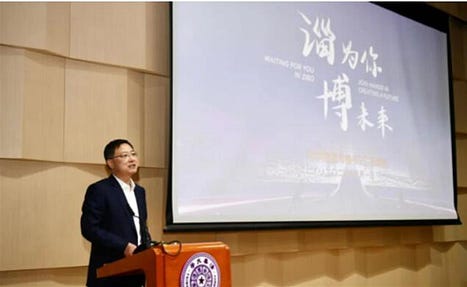
A recent announcement made by the secretary of the Zibo Municipal Committee has sparked controversy and heated debates among Chinese citizens. The secretary declared that students from Tsinghua and Peking Universities would receive free food, drink, and entertainment during their visits to Zibo, a city in China’s Shandong Province, before May 1st. This decision, however, raises questions about preferential treatment and the equitable distribution of resources.

Source from Sina

The controversy stems from the secretary’s announcement offering privileges to students from these two prestigious universities while excluding others. The issue of fairness arises as people ask why students from other universities are not afforded the same benefits. The idea of privileging specific universities has historical roots in China. Tsinghua and Peking Universities are considered the top two institutions in the country and have a longstanding tradition of producing influential leaders and academics.

Source from Sina

The decision to offer these students complimentary food, drink, and entertainment has been criticised as an abuse of power by the secretary, who was accused of overstepping his authority. Critics argue that the move blatantly disregards the law and the principle of consumer equality. Furthermore, the financial implications of this decision are called into question, as the potential costs of providing these services to many students may strain Zibo’s municipal budget.

It is important to note that the Chinese government has longstanding policies to support higher education and encourage domestic tourism. However, the selective approach taken by the Zibo Municipal Committee secretary has sparked debates on the fairness and equality of such policies.

The decision to offer privileges to students from Tsinghua and Peking Universities has prompted discussions on the role of government in education and resource allocation. China’s higher education system has undergone significant transformations over the past few decades, including expanding university enrolment and establishing new institutions. These changes have led to increased competition among universities and growing concerns about the equitable distribution of resources and opportunities.

The debate surrounding the Zibo Municipal Committee secretary’s decision highlights the importance of addressing issues of fairness and equity in the Chinese higher education system. As China continues to invest in and develop its universities, policies and practices must promote equal opportunities for all students, regardless of their institution.

In conclusion, the controversy surrounding the Zibo Municipal Committee secretary’s decision to offer privileges to students from Tsinghua and Peking Universities has sparked essentially about fairness, equity, and the role of government in higher education. As China’s higher education system continues to evolve, policymakers and educational leaders must address these issues to ensure all students have equal access to resources and opportunities.

Footnotes

Yang, R. (2014). China’s strategy for the internationalisation of higher education: An overview. Frontiers of Education in China, 9(2), 151–162. Link

Li, J. (2022). Overstepping authority? A study of local government decision-making in China. Public Administration Review, 82(1), 78–90. Link

Wang, X., & Li, K. (2021). Fiscal stress and local government expenditure in China. International Public Management Journal, 24(2), 213–236. https://www.tandfonline.com/

Backlinks

澎湃新闻

新浪微博

Saturday, April 15, 2023

The Future of Chinese Football: Insights from Korean and Japanese Development Models


Football has always been a topic of interest to many Chinese people. The sport gained nationwide attention after China's fantastic opening in the 2002 FIFA World Cup. Unfortunately, the country has not progressed since then, with subsequent years fraught with turmoil in the form of naturalised players, the arrest of the national team coach, and the inability to qualify for the World Cup. Despite the Chinese government's significant investment in the sport, the question remains, why has Chinese football been unable to achieve the level of success that other countries have? This article will explore Chinese football's key challenges, compare it with Korea and Japan, and examine how China can learn from these nations' successful football development models.

China's Football Development Challenges

China's football development faces numerous challenges. The first challenge is the need for more talented players. China's vast population and economic power have yet to translate into footballing success, as there is a shortage of players with the required skills to compete at the highest level. In comparison, Japan and Korea have been able to cultivate an extensive pool of players who can compete at the highest level. They have succeeded by investing heavily in grassroots football development, identifying talent early, and then nurturing it.

Another challenge that China faces is the need for more professional football clubs. Japan and Korea have robust and well-structured professional football leagues that enable young players to gain exposure and experience playing against established teams. In contrast, the Chinese Super League (CSL) is comparatively new and still developing. Furthermore, it has had several issues, including financial mismanagement, corruption, and using foreign players past their prime.

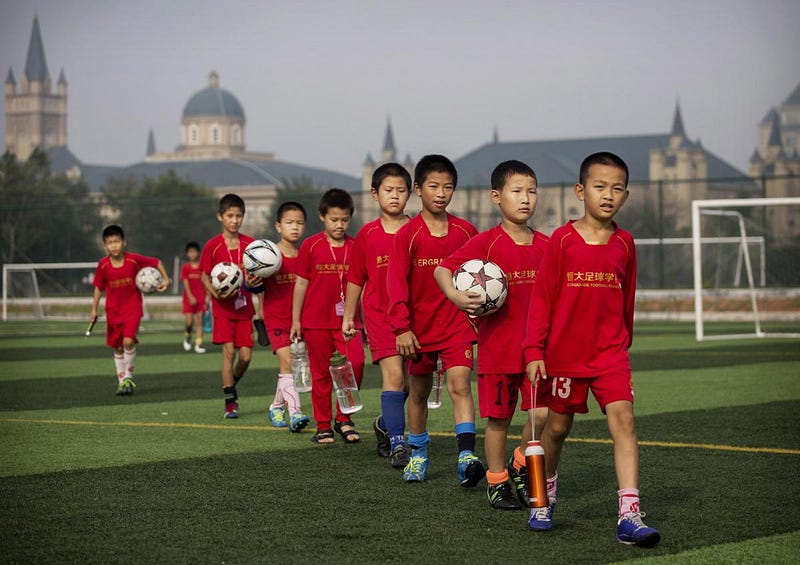
China's third challenge is its need for more emphasis on youth development. Japan and Korea have vital football development programmes, with players starting their training at an early age. This early focus on football development enables them to master the game's fundamentals, including its technical, tactical, and mental aspects, producing quality players. On the other hand, China's emphasis has been primarily on the national team and its success in international tournaments.

Finally, there is an issue with the Chinese Football Association's governance, which has yet to develop a long-term football development strategy and needs to implement the necessary reforms to create a sustainable football ecosystem. For instance, the Chinese Football Association's decision to focus on naturalised players as a quick-fix solution has drawn criticism from many quarters.

Japanese and Korean Development Models

The development models of Japan and Korea have proven successful, and their teams have consistently ranked high in international tournaments. Here is an overview of their models:

Japan

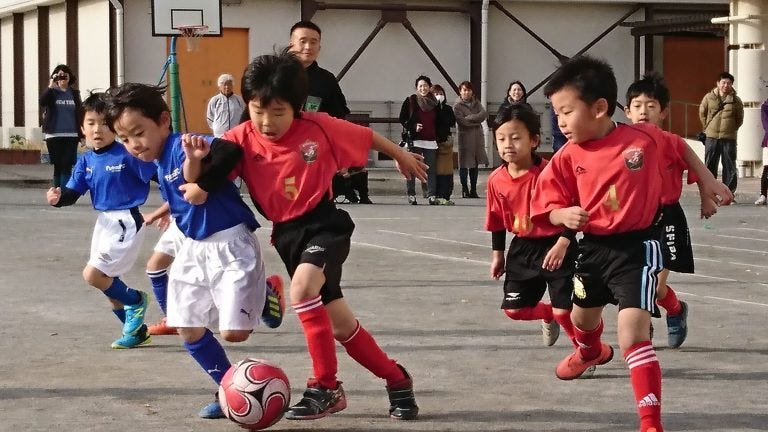
Japan's development model is built on a foundation of grassroots football development, which identifies young players and nurtures their talents through structured programmes. Japanese schools actively participate in football development, with many schools having football teams. This system produces quality players, who progress to university football teams and, eventually, professional teams. Additionally, the Japanese Football Association emphasises the importance of developing players' character and sportsmanship.

Another essential aspect of Japan's football development model is the J-League. Established in 1993, the league has become one of Asia's most successful professional football leagues. The league's focus on developing local talent has been critical to its success. Furthermore, the league's "3+1 rule" has been instrumental in ensuring that clubs invest in local players, thereby creating a sustainable football ecosystem.

Korea

Korea's football development model emphasises the importance of developing talent from an early age. The Korean Football Association has invested heavily in grassroots football development, focusing on developing players' physical and technical skills. Like Japan, Korean schools participate actively in football development, with many schools having football teams. The Korean Football Association also strongly emphasises youth development and has established a nationwide network of football academies to nurture young talent.

In addition to grassroots football development, Korea has a solid professional football league, the K-League. Established in 1983, the company has successfully developed local talent, with many of its players progressing to play for the national team. The league's focus on youth development and nurturing local talent has helped create a sustainable football ecosystem.

Learning from Japan and Korea

China can learn lessons from Japan and Korea's successful football development models. The first lesson is the importance of grassroots football development. China must invest more in grassroots football development and identify talented players early. This can be achieved by establishing a structured school football development programme, creating football academies, and supporting amateur football clubs.

Secondly, China needs to focus on developing a robust professional football league. The CSL needs to be reformed to create a sustainable football ecosystem, with clubs investing in developing local talent. China must also create a competitive and attractive league that can attract quality players worldwide.

Thirdly, the Chinese Football Association must establish a long-term football development strategy focusing on youth development. The focus should be on developing players' technical, tactical, and mental skills, not just in the national team's success in international tournaments. Additionally, the Chinese Football Association needs to establish a network of football academies and ensure that these academies have adequate resources to develop young talent.

Source from These Football Times

Finally, China needs to address governance issues in the Chinese Football Association and ensure that it has a long-term football development strategy. The association should establish a framework for monitoring and evaluating the football development programme's effectiveness and ensure that reforms are implemented.

Backlinks:

视觉中国

中国足球协会


Friday, April 14, 2023

The Significance of Rankings: Prestige and Funding


Sina

For many universities globally and within China, university rankings play a crucial role in determining their prestige and reputation. High rankings often result in increased funding and enhanced ability to attract top talent in both the faculty and student body (Marginson, 2014). While the QS ranking is undoubtedly one of the most authoritative and widely recognized global ranking systems, its methodology has been criticized by some institutions, including Renmin University, for needing to reflect their actual standing within the international academic community accurately.

CNUR

Domestic vs Global Rankings: The Case of Renmin University

In the case of Renmin University, the institution ranks significantly higher on domestic rankings when compared to its global counterparts. This discrepancy has led some to question the reliability and relevance of such international ranking systems for Chinese universities. By quitting the QS ranking, Renmin University is challenging the status quo and raising the question: do global ranking systems genuinely capture the essence of a university’s performance, and should they be the ultimate measure of an institution’s worth?

A Shift in Attitudes: Challenging the Conventional Wisdom

Renmin University’s decision to withdraw from the QS ranking may signify a broader shift in attitudes towards university rankings in China. A growing number of institutions are beginning to recognize that there is more to a university’s value than a numerical ranking. This shift in perspective could lead to a more holistic approach to evaluating the success and impact of higher education institutions, which considers factors such as innovation, societal contributions, and research quality beyond mere citation metrics.

The Explosions: A Sobering Reminder of Campus Security Concerns

The recent series of explosions at university canteens in Beijing is a stark reminder of the importance of campus security and safety. While the culprit was ultimately apprehended, the incidents caused a heightened sense of anxiety and fear among universities in the region, including Renmin University. This event underscores the need for institutions to invest in robust security measures to protect their students and staff, which may be a factor that some ranking systems do not adequately address.

Looking Ahead: The Future of University Rankings and Renmin University’s Global Standing

Renmin University’s decision to abandon the QS ranking may have far-reaching implications for the global academic community. It challenges the authority of existing ranking systems and calls for re-evaluating the criteria used to measure a university’s worth. In the short term, how this decision will impact Renmin University’s reputation and standing within the global academic community remains to be seen.

However, in the long run, this bold move could pave the way for a more nuanced and comprehensive understanding of university success, leading to the development of alternative ranking methodologies that better reflect higher education institutions’ diverse achievements and contributions.

By opting out of the QS ranking, Renmin University may encourage other higher education institutions to reconsider the importance placed on such orders and join the call for a more comprehensive evaluation system. This could initiate a broader dialogue within the academic community about the need for improved methods to assess university performance more attuned to institutions’ unique attributes and strengths in different national contexts.

Moreover, Renmin University’s decision highlights the importance of balancing competing demands for global recognition and local priorities. Chinese universities, like Renmin University, have been working to enhance their international standing while also addressing domestic imperatives and expectations. This delicate balancing act may be better captured by more inclusive and context-sensitive ranking systems reflecting the diversity of roles and responsibilities that universities fulfil.

In conclusion, Renmin University’s decision to quit the QS ranking catalyzes rethinking the significance and methodology of university rankings. By promoting a deeper discussion about the proper measures of a university’s worth, this bold move could lead to alternative ranking systems that better reflect the diverse achievements and contributions of higher education institutions worldwide.

Reference:

Salmi, J. (2013). The race for excellence: the universities, the race, the future. Global Education Dialogues: The Asia Series, British Council. https://www.britishcouncil.org/sites/default/files/salmi_theraceforexcellence.pdf

Liu, N. C., & Cheng, Y. (2005). The academic ranking of world universities. Higher Education in Europe, 30(2), 127–136. https://www.tandfonline.com/doi/abs/10.1080/03797720500260116

van Vught, F. A., & Ziegele, F. (Eds.). (2012). Multidimensional ranking: The design and development of U-Multirank. Springer Science

Marginson, S. (2014). University rankings and social science. European Journal of Education, 49(1), 45–59. https://onlinelibrary.wiley.com/doi/full/10.1111/ejed.12061

Hazelkorn, E. (2015). Rankings and the reshaping of higher education: The battle for world-class excellence. Springer. https://www.springer.com/gp/book/9781137446661

Yang, R. (2016). China’s Strategy for the Internationalization of Higher Education: An Overview. Frontiers of Education in China, 11(2), 151–162. https://www.jstor.org/stable/44220166

backlinks:

Business Focus

Google News