Thursday, May 4, 2023

The State of Digital Banking in China: A Look at MYbank and WeBank

Source from vtv.vn

Digital banking has been rising in China, with MYbank and WeBank leading as two of the country's first privately funded internet-only banks. Backed by Ant Group and Tencent Holdings, these banks have leveraged their parent companies' massive user bases to expand their reach and offer innovative financial products and services to consumers and small and micro enterprises. However, recent reports have shown that MYbank and WeBank are experiencing some challenges, including a rise in bad loans and slower growth of their balance sheets. In this article, we will take a closer look at the state of digital banking in China through the lens of MYbank and WeBank, examining their current challenges and opportunities for growth.

MYbank: Rising Bad Loans and Slower Growth

MYbank, which is 30% owned by Ant Group, reported a rise in its nonperforming loan (NPL) ratio for 2022, which was 1.94%, up 0.41 a percentage point from the previous year. While this increase was within expectations, it reflects measures taken to help small and micro enterprises offset the impact of the pandemic last year. Despite the rise in bad loans, MYbank still posted higher profits and healthy liquidity metrics, indicating that the bank is still in good shape.

One of the challenges facing MYbank is the slower growth of its balance sheet. The bank's total assets increased by only 9.7% in 2022, compared to 25.5% in the previous year. This slower growth is likely due to increased competition in digital banking and a more cautious lending environment in China. However, MYbank has maintained a healthy capital adequacy ratio (CAR) of 17.2%, which is well above the regulatory requirement of 10.5%.

Despite these challenges, MYbank has continued to innovate and expand its product offerings. In 2022, the bank launched a new product called "MYbank Business Credit," which provides small and micro enterprises with a credit line of up to RMB 5 million (US$780,000) that can be used for working capital, capital expenditures and other business needs. This product has been well-received by customers, with over 80% of the credit line already being used.

WeBank: Similar Challenges, Different Approach

WeBank, which is 30% owned by Tencent Holdings, has also reported a rise in its NPL ratio for 2022, which was 1.47%, up 0.27 percentage points from the previous year. While this increase is lower than MYbank, it still indicates that the bank is facing similar challenges in terms of credit risk. However, WeBank has also posted higher profits and healthy liquidity metrics, suggesting that the bank is still performing well overall.

Like MYbank, WeBank has also experienced slower growth of its balance sheet, with total assets increasing by only 9.7% in 2022, compared to an increase of 20.1% in the previous year. However, WeBank has taken a different approach to addressing this challenge. Rather than focusing solely on lending to small and micro enterprises, WeBank has expanded its product offerings to include wealth management and insurance products, which have helped to diversify its revenue streams and mitigate the impact of slower loan growth.

One of WeBank's most innovative products is its "WeSure" platform, which offers consumers a range of insurance products, including travel, health, and pet insurance. This platform leverages Tencent's massive user base to reach a wider audience and has attracted new customers to the bank. In addition, WeBank has also launched a new product called "Wealth Management Connect," which allows customers to invest in wealth management products offered by banks in both mainland China and Hong Kong. This product has been well-received by customers, with over RMB 1 billion (US$156 million) invested in the first month of its launch.

Opportunities for Growth

Despite the challenges facing MYbank and WeBank, there are still opportunities for growth in the digital banking space in China. One of the most significant opportunities is the increasing demand for digital financial services among consumers and small and micro enterprises. As more people in China become comfortable using digital platforms for financial transactions, the need for digital banking services will likely grow.

Another opportunity for growth is the increasing focus on financial inclusion in China. Digital banks like MYbank and WeBank have reached underserved populations in China, such as small and micro enterprises and rural residents, who may not have had access to traditional banking services. As the Chinese government continues to promote financial inclusion and support the growth of digital banking, these banks will have more opportunities to expand their reach and serve new customers.

Backlinks

“疫情冲击下 网商和微众银行2022年不良率上升、资产负债扩张放缓”, Caixin, 30 Apr 2023, https://finance.caixin.com/2023-04-30/102041630.html

"Top Chinese Digital Banks Report More Bad Loans but Higher Earnings", Caixin, 03 May 2023, https://www.caixinglobal.com/2023-05-03/top-chinese-digital-banks-report-more-bad-loans-but-higher-earnings-102041890.html

“微众银行年营收354亿:税收贡献近50亿 腾讯持股33%”, Sohu News, 16 Apr 2023, https://www.sohu.com/a/667151401_430392 
Outrageous Demand: Over 780,000 Apply for H1B Visas, With Only a 15% Acceptance Rate


The number of H1B visa applications has dramatically increased this year, with applications rising from 480,000 to 780,000 in just one year due to the hyper-growth of technology companies in 2021–22. The acceptance rate for H1B visas is now less than 15%, which is worrying.

Leading Firm and Trump Administration’s Effect

Leading the pack, Indian consulting firm ICC has submitted 400,000 applications on behalf of 96,000 people, which equates to each individual having raised more than four applications. The fall in applications between 2018 and 2019 was mainly due to the Trump administration’s strict scrutiny of company qualifications and professional matching. This led to a significant reduction in ICC’s applications and numerous false negatives.

Demand for High-Skilled Workers and Need for Visa System Reform

Removing the multiple applications, almost 500,000 people have applied for H1B visas this year. The demand for high-skilled workers in the tech industry is apparent, and it is high time that the U.S. visa system is reformed. Either the number of visa quotas should be increased, or the abuse of the visa system should be prevented, such as outsourcing firms obtaining over 50% of H1B visas by paying workers the minimum wage, for example, $80,000, which is entirely unchecked and only exacerbating the problem.

Historical Context of the H1B Visa System

Those who graduated before 2015 will need help understanding what it is like to experience the current situation of 780,000 H1B visa applications competing for 85,000 spots through the lottery-based system. It is akin to the difficulty of finding employment during the financial crisis in the early 2000s or even the mid-90s when only 115,000 H1B visas were issued yearly, which is insurmountable if quotas remain the same as they have done for over two decades.

The current political polarisation over illegal immigrant issues will likely make resolving the visa situation in the short term challenging.

Backlinks

“US H-1B Visa Lottery System Resulted In Abuse, Fraud, Says Federal Agency”, NDTV, 29 Apr 2023, https://www.ndtv.com/world-news/us-h-1b-visa-lottery-system-resulted-in-abuse-fraud-says-federal-agency-3989714

“H-1B fraud: Here’s how consultancies scam applicants without real job offers”, mint, 1 May 2023, https://www.livemint.com/news/world/h1b-fraud-heres-how-consultancies-scam-applicants-without-real-job-offers-11682911688723.html

“Tech companies accused of gaming the H-1B lottery system”, CBS News, 28 Apr 2023, https://www.cbsnews.com/news/tech-companies-accused-of-gaming-the-h-1b-lottery-system/

The Rise of Paid Study Spaces: Understanding the Trend of “Buying Discipline”

Source from WeWork

In recent years, paid study spaces have become increasingly popular among young people in China. From large cities to small towns, these spaces offer a quiet and focused environment for students to study and work on their projects. The trend has sparked a debate on whether “buying discipline” is good or bad. This article explores the reasons behind the popularity of paid study spaces, the benefits and drawbacks of this trend, and its implications for the future.

What are Paid Study Spaces?

Source from sixthtone

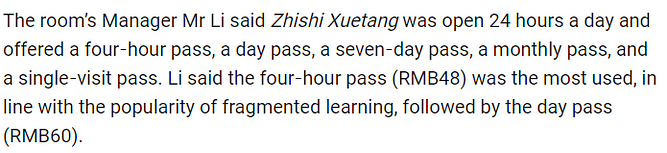
Paid study spaces, also known as shared study rooms or co-working spaces, are commercial facilities that provide a quiet and comfortable environment for people to study or work. These spaces usually have desks, chairs, power outlets, Wi-Fi, and other amenities that help people focus on their tasks. Some paid study spaces also offer private rooms or cubicles for people who need more privacy or quietness.

The rise of paid study spaces in China can be attributed to several factors. Firstly, the increasing competition for education and job opportunities has put immense pressure on young people to perform academically. As a result, many students seek a quiet and focused environment where they can study without distractions. Secondly, the need for more suitable study space in public libraries and schools has led to a shortage of study space for students. Finally, the increasing popularity of remote work and freelancing has created a demand for affordable and flexible workspaces.

Benefits of Paid Study Spaces

Paid study spaces offer several benefits to students and workers. Firstly, they provide a quiet, focused environment that helps people concentrate on their tasks. This is especially important for students studying for exams or completing assignments. Secondly, paid study spaces offer a sense of community and support. Many people who use these spaces are like-minded individuals striving to achieve their goals. This creates a supportive and motivating environment that can help people stay on track. Thirdly, paid study spaces offer flexibility and convenience. Unlike public libraries or schools, paid study spaces are open 24/7 and do not have strict rules or regulations.

Drawbacks of Paid Study Spaces

Despite the benefits, paid study spaces also have some drawbacks. Firstly, using these spaces can be prohibitive for some people. In larger cities, a monthly membership can range from 1000 to 3000 yuan, which is only affordable for some. Secondly, the quality of these spaces can vary greatly. Some areas may be overcrowded, noisy, poorly maintained, distracting and counterproductive. Thirdly, using paid study spaces can create a culture of “buying discipline” where people rely on external factors to motivate themselves rather than developing their self-discipline.

Source from HKTDC

Implications for the Future

The rise of paid study spaces reflects China's changing attitudes towards education and work. As the competition for academic and job opportunities intensifies, more people seek ways to improve their skills and knowledge. Paid study spaces provide a convenient and affordable way for people to achieve their goals. However, the trend also raises questions about the role of self-discipline and intrinsic motivation in achieving success. As more people rely on external factors to motivate themselves, there is a risk of creating a culture of “buying discipline” that may not be sustainable in the long run.

Conclusion

Paid study spaces have become a popular trend among young people in China. These spaces offer a quiet and focused environment that helps people concentrate on their tasks. However, the movement also raises questions about the role of self-discipline and intrinsic motivation in achieving success. As the competition for academic and job opportunities intensifies, balancing external stimulation and internal motivation is essential. Paid study spaces can help achieve short-term goals, but self-discipline and intrinsic motivation are necessary for long-term success.

Backlinks

“More young people are trying paid study centres for self-improvement”, Global Times, 15 Jan 2020, https://www.globaltimes.cn/content/1176939.shtml

“Private Study Rooms Emerge as Refuge for Examinees”, Sixthtone, 21 Oct 2022, https://www.sixthtone.com/news/1011458

“In a Class of Their Own: Surge in Demand for Guangzhou Paid Study Rooms”, HKTDC Research, 22 Nov 2022, https://research.hktdc.com/en/article/ODg4MjE1OTM3

Monday, May 1, 2023

The Ethics of AI: Should We Use Technology to Bring Our Loved Ones Back to Life?

Source from Pengpai
Source from Pengpai
Source from Pengpai

Sunday, April 30, 2023

Should gender divide Soft Sleeper Train Compartments? A Look at the Chinese Context

Source from sgss8
Source from Pengpai

Friday, April 28, 2023

The Future of China’s Economy: The Rise of Consumerism

Source from Soho

China’s economy has been growing tremendously over the past few decades, driven primarily by investments in infrastructure and manufacturing. However, as the country’s economy matures, the focus shifts from investment-driven to consumption-driven growth. In the next decade, consumer spending will be the primary driver of China’s economic growth.

The Rise of Consumerism in China

China’s younger generation increasingly prioritizes personal consumption over traditional markers of success, such as owning a home or starting a family. This trend is known as “lying flat” or “tangping” in Chinese, significantly affecting the country’s economy.

Unlike previous generations, who had to allocate a significant portion of their income towards housing, education, and childcare, the younger generation has more disposable income, spending on a wide range of consumer goods and services. From ordering takeout and going out for hot pot or sushi to buying luxury brands, travelling abroad, and investing in new energy vehicles, Chinese consumers are driving the growth of a thriving consumer economy.

The Impact of Consumerism on China’s Economy

The shift towards consumption-driven growth has important implications for China’s economy. As investment-driven growth slows, consumer spending becomes an increasingly crucial economic growth driver. With its large population and growing middle class, China has the potential to be one of the world’s largest consumer markets.

This shift also creates opportunities for new industries, such as e-commerce, online entertainment, and personal finance, to emerge and thrive. These industries benefit from the growth of digital technologies, making it easier for people to access goods and services online.

Moreover, consumerism is reducing the country’s dependence on exports. As the country’s economy becomes more consumer-driven, China will rely less on foreign export demand. Instead, it can depend more on domestic needs to fuel its economic growth. This will make China more resilient to external economic shocks, such as a global economic downturn or protectionist trade policies.

Challenges Ahead

While consumerism drives China’s economic growth, some challenges must be addressed. One of the biggest challenges is income inequality, which is widening between urban and rural areas and across different regions in China. This could undermine the sustainability of China’s consumer-driven growth model by limiting the buying power of large segments of the population.

Another challenge is the need to balance consumerism with sustainable development. As Chinese consumers become wealthier and more consumption-oriented, there is a risk that they will prioritize immediate gratification over long-term sustainability. This could have negative consequences in terms of environmental degradation and resource depletion.

Conclusion

In conclusion, the rise of consumerism is transforming China’s economy and driving economic growth. With a large and growing middle class, China has the potential to be one of the world’s leading consumer markets. However, to ensure the sustainability of this growth model, China will need to address challenges such as income inequality and environmental sustainability. If these challenges are addressed, China’s consumer-driven growth model has the potential to create significant economic opportunities for the country and its citizens in the coming years.

Backlinks

2023中国消费者洞察与市场展望白皮书 — Deloitte

Thursday, April 27, 2023

Bank Failures and the Ripple Effect: Unravelling the Intricacies and Safeguarding the US Economy

Source from China Daily

As Jerome Powell, the Federal Reserve Chairman, elucidated in a recent press conference, the current bank failures in the United States stemmed from a combination of liquidity and interest rate risks, inadequate management, and exposure to a concentrated group of depositors. The collapse of these banks threatens to send shockwaves through the entire economy, potentially undermining public confidence in the banking system. Consequently, in conjunction with the Treasury Department and the Federal Deposit Insurance Corporation (FDIC), the Federal Reserve has taken decisive measures to protect the US economy and guarantee the security of depositors’ savings.

Source from CBS News

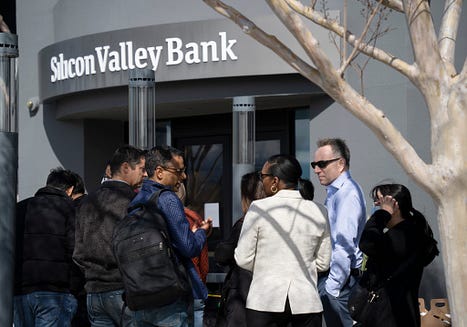
In particular, the Federal Reserve has implemented the systemic risk exception to protect uninsured depositors in Signature Bank and Silicon Valley Bank cases. According to Powell, one of the primary issues with Silicon Valley Bank was that its management should have hedged against significant interest rate risks, leaving the bank vulnerable. Additionally, the bank had a concentrated group of depositors, including technology companies and start-ups, which ultimately precipitated the crisis.

Silicon Valley Bank’s troubles began a few years prior when it purchased a substantial volume of long-term US treasury bonds. As interest rates increased, the value of these bonds declined. When the bank experienced a surge in withdrawals from depositors, it was forced to sell these bonds prematurely to cover the leaves, prompting the need to raise capital, spooking investors, and triggering a massive bank run.

To curb the ripple effects resulting from the collapse of these two banks, the Federal Reserve has laid out several courses of action. In his press conference, Powell detailed the Federal Reserve’s plans to review supervision and regulation, identify the underlying issues, assess the necessary policy changes, and implement these new policies. The review process will be comprehensive and transparent, with any recommendations fully supported for implementation. Powell has expressed his commitment to determining what went wrong and amending the relevant policies to prevent similar situations from occurring in the future.

Powell briefly touched upon the recent Credit Suisse debacle, although he could not provide extensive commentary due to the matter falling outside his jurisdiction. Credit Suisse, a prominent Swiss bank, failed last week and was acquired by UBS at a significantly reduced price with the assistance of the Swiss National Bank, Switzerland’s central banking authority[⁸^]. The markets have responded favourably to the transaction, which appears to have proceeded smoothly.

In summary, the Federal Reserve, Treasury Department, and FDIC have taken resolute action to safeguard the US economy and ensure the security of depositors’ savings in the banking system in light of recent bank failures. The systemic risk exception has been implemented to protect uninsured depositors in cases involving banks such as Signature Bank and Silicon Valley Bank. Powell has vowed to examine the root causes of the failures and implement necessary policy changes to prevent future incidents. The Credit Suisse situation was also briefly mentioned, with the markets seemingly accepting the transaction and its successful execution.

Footnotes

Federal Reserve. (2022). Transcript of Chairman Powell’s Press Conference. Retrieved from https://www.federalreserve.gov/mediacenter/files/FOMCpresconf20220405.pdf

Treasury Department. (2022). Treasury, Federal Reserve, and FDIC actions to address bank failures. Retrieved from https://home.treasury.gov/news/press-releases/jy0487

FDIC. (2022). Systemic Risk Exception: Protecting Uninsured Depositors. Retrieved from https://www.fdic.gov/regulations/laws/rules/2000-8660.html

The Invisible Assassin: How Dating Apps Threaten Modern Marriage


Source from Pexels

The institution of marriage has been a cornerstone of human society for centuries, evolving with cultural and social norms. However, the rapid proliferation of dating apps in the digital era has led some to question whether these platforms threaten the stability of modern marriages. As suggested by Dr Cheng Ping, a sociologist at Nanjing University, the number of extramarital affairs facilitated by dating apps has surged by 20% since 2014. This article delves into the factors that make married individuals susceptible to the temptations of online platforms and explores the impact of dating apps on marital relationships.

One must first consider the underlying motivations to understand why some individuals seek extramarital connections through dating apps. According to research by Walker (2017), there are several reasons why people seek affairs, including a desire for novelty, emotional fulfilment, or sexual gratification. The anonymity offered by online platforms allows users to explore these desires without the immediate risk of exposure. A study by Anderson (2014) found that married individuals using dating apps were likelier to pursue short-term relationships and seek validation from others.

Furthermore, dating apps can exacerbate existing issues within a marriage. Research by Hertlein (2012) suggests that technology has transformed how couples communicate and resolve conflicts. As a result, partners who struggle to address their problems effectively may increasingly turn to date apps as an escape, seeking solace in the attention and validation of others. This can create a vicious cycle wherein dating apps further undermine the couple’s ability to communicate and resolve their issues.

Another factor to consider is how married individuals present themselves on dating apps. Studies indicate that they often attempt to portray an idealised version of themselves, emphasising their physical attractiveness, professional success, and adventurous nature. This façade may encourage connections based on superficial traits rather than the deeper compatibility necessary for a lasting relationship. Consequently, individuals may find themselves entangled in fleeting, unsatisfying affairs that only serve to exacerbate their marital problems.

Source from Pexels

The psychological impact of using dating apps while married can also be significant. Research by McDaniel and Drouin (2015) found that individuals who engaged in online infidelity experienced higher levels of guilt, anxiety, and depression than those who did not. This emotional turmoil can further strain a marriage, potentially leading to its eventual breakdown.

Despite the challenges dating apps pose, it is essential to recognise that they are not solely responsible for the decline in modern marriages. Societal factors, such as shifting attitudes towards marriage and the increasing prevalence of individualism, also weaken marital bonds. Additionally, online platforms can be seen as a symptom of broader societal issues, reflecting a growing desire for instant gratification and an increasingly disconnected approach to interpersonal relationships.

In conclusion, while dating apps present a significant challenge to the stability of modern marriages, other causes exist. Instead, they serve as a catalyst, exacerbating existing issues within relationships and capitalising on the vulnerabilities of individuals seeking connection and validation. Promoting open communication and trust within marital relationships and fostering a more compassionate and connected society are crucial to address this issue.

Citations

Shu Xin, First China Marriage and Family Counselling Services Industry Summit Forum, 2014.

Walker, R. (2017). The Secret Life of the Cheating Wife: Power, Pragmatism, and Pleasure in Women’s Infidelity. Rowman & Littlefield.