Sunday, April 9, 2023

The Upward Trend in China’s Minimum Wage: Implications and Impact

资料来源:今天头条
资料来源:今天头条

In recent years, China’s minimum wage has experienced significant adjustments, leading to higher standards for the lowest-paid workers in various regions. According to data from the Ministry of Human Resources and Social Security, 15 areas in China have set their minimum monthly wages at or above 2,000 yuan as of 1st April 2023. Shanghai currently holds the highest minimum wage at 2,590 yuan, followed by Shenzhen, Beijing, Guangdong, Jiangsu, Zhejiang, Hebei, Tianjin, Shandong, Sichuan, Chongqing, Anhui, Fujian, Hubei, and Henan.

The minimum wage regulations in China allow for different standards within provinces, autonomous regions, and municipalities. These standards are generally set as minimum monthly wages for full-time employees and hourly wages for non-full-time employees. Beijing currently has the highest hourly minimum wage in the country at 25.3 yuan.

资料来源:人社通

The question of whether minimum wage standards include the “Five Insurances and One Fund” (五险一金) — the mandatory social insurance and housing provident fund contributions for individuals — varies across different regions. In most areas, the minimum wage standards do encompass this contribution. Anhui, for example, adjusted its minimum wage standard in March 2023 to include individual contributions for social insurance and housing provident funds, aligning it with other provinces1.

However, minimum wage standards in Beijing and Shanghai do not include these contributions. Employers in these cities must pay these contributions separately, making the minimum wage higher than the stated amount.

When minimum wage standards are raised, they not only directly increase the wages of low-income workers but also have a ripple effect on other benefits. For instance, unemployment insurance benefits, wages during medical leave, probationary period wages, and basic living expenses for workers during company shutdowns or business suspensions tend to increase along with the minimum wage[⁴^]. In Anhui, unemployment insurance benefits are set at 90% of the minimum wage and are adjusted accordingly. With the recent increase in Anhui’s minimum wage, several areas have changed their unemployment insurance benefits.

This upward trend in minimum wage standards could have several implications. For workers, higher minimum wages may improve living standards, reduce income inequality, and stimulate consumption. The higher wage floor could increase labour costs and compel businesses to improve productivity and efficiency.

However, some experts argue that raising the minimum wage could lead to job losses or push companies to cut back on other employee benefits. Additionally, there is a concern that higher minimum wages could contribute to inflation, as businesses may pass on increased labour costs to consumers.

In conclusion, the recent increases in China’s minimum wage standards signify a step towards improving the living conditions of low-income workers. However, it is essential to carefully monitor the potential economic consequences of these adjustments to ensure balanced and sustainable growth.

Reference:

  1. 长江日报最低薪资(2023.03) https://news.cjn.cn/zjzycsqpd/wh_20023/202304/t4515712.htm
  2. 人社通各省市最低薪资(2023.03) https://m12333.cn/policy/wrib.html

Revolutionising Content Creation: 6 AI Tools to Elevate Your Game


As we venture further into the digital age, the realm of content creation has evolved significantly, with artificial intelligence (AI) becoming a powerful force in shaping the future of this industry. AI-powered tools transform how content is created and consumed, from generating images to creating websites, animating photos, composing music, editing podcasts, and designing branded content.

This article will explore six innovative AI tools that will revolutionise how you create content and help elevate your creative game.

PlaygroundAI: AI-Generated Images for Enhanced Visual Appeal
(https://playgroundai.com)

PlaygroundAI is an AI-powered platform enabling creators to generate custom images using prompts. With the ability to adjust features such as colour, shape, and texture, PlaygroundAI provides content creators with a valuable resource for high-quality, visually appealing images that enhance their posts and engage their audience.

Mixo and Durable: Streamlined Website Creation with AI
(https://mixo.app) (https://durable.ai)

Mixo and Durable are AI-powered platforms that simplify creation by generating professional and customised websites within seconds. Requiring no technical or coding skills, these user-friendly tools allow creators to focus on the design, layout, and content while the AI algorithms handle the technical aspects.

Deep Nostalgia: Bringing Old Photos to Life with AI
(https://www.myheritage.com/deep-nostalgia)

Deep Nostalgia uses AI technology to animate still images, breathing new life into old photos and creating moving images of people, places, and things. This platform offers a unique way to add a touch of magic to your old photos, evoking cherished memories and capturing the essence of the moment.

Beatoven: Create Your Music with AI Assistance
(https://beatoven.ai)

For music enthusiasts with limited technical knowledge, Beatoven offers an AI-powered music platform that enables users to create royalty-free music for their content. The user-friendly interface allows creators to experiment with different genres, sounds, and moods until they find the perfect combination for their vision.

Cleanvoice AI: Efficient Podcast Editing with AI
(https://cleanvoice.ai)

Cleanvoice is an AI-powered tool that automates the editing process for podcast episodes, eliminating filler words, awkward silences, and background noise. By saving time and effort, podcasters can focus on creating new episodes, engaging with their audience, and growing their podcast, all while ensuring a polished and professional sound.

Flair: Streamlined Branded Content Creation with AI
(https://flair.ai)

Flair is an AI design tool that simplifies creating branded images. By dragging product photos into the canvas and customising the visuals, content creators can optimise their branded content creation process and improve their brand’s image, increasing visibility and recognition.

In conclusion, integrating AI into content creation has opened new avenues for innovation and efficiency. These six AI tools have the potential to revolutionise the way you approach content creation and elevate your creative game. By harnessing the power of AI, you can streamline your processes, save time and resources, and focus on what truly matters: creating captivating content that resonates with your audience.

The Mysterious Case of the "996" Protest in China: A Closer Look at the Controversial WeChat Chat Records

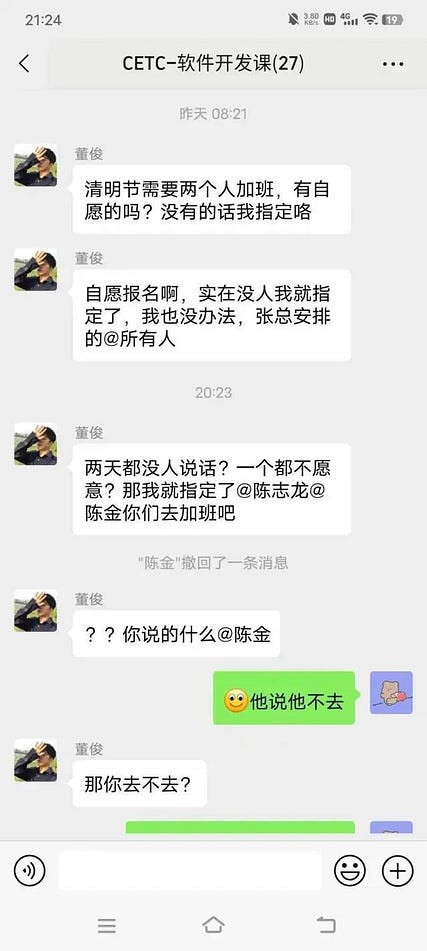
Recently, a WeChat group chat conversation has caused a stir on China's internet. From Weibo to Douyin, from Kuaishou to Bilibili, and even on Toutiao, almost everyone is talking about the chat records of this WeChat group. The chat records are quite lengthy, spanning several pages, and the content is about an employee named Chen Zhilong. Before the Qingming Festival, his boss asked them to work overtime, and he took off his Kong Yiji-style robe and directly confronted his boss. This action received cheers from his colleagues in the WeChat group. These chat records have resonated greatly with the public, as many people are experiencing the "996" work culture, where they work from 9 am to 9 pm, six days a week. This also exposes the reality of many Chinese companies violating labour laws and forcing employees to work overtime.

After such an incident is exposed, the relevant departments should investigate which organization is involved, who is breaking the law, and how to handle it. However, surprisingly, the situation has become mysterious and unclear. This is because, in this WeChat group, the name of the project team is a subsidiary of China Electronics Technology Group Corporation (CETC). But on April 5th, CETC issued a statement saying that the unit mentioned in the chat record is not a subsidiary of CETC, and the employee mentioned is not an employee of CETC. In other words, this has nothing to do with CETC. Here, I would like to add some information about CETC. It was initially part of the Ministry of Electronics Industry and later transformed into an enterprise mainly serving the Chinese military. For example, most of China's radar design and manufacturing is handled by departments under CETC. It is a first-class confidential unit.

Subsequently, the Sichuan Provincial Federation of Trade Unions also stated in an interview that this incident did not happen in Chengdu. This is because the WeChat group mentioned a project team in Chengdu, but he said it happened somewhere else and didn't happen this year. In any case, whether it is CETC or the Sichuan Provincial Federation of Trade Unions, they keep their distance from this matter, which is very strange. It is still being determined where the incident occurred, and it is even faint if it happened. Some people are sceptical and believe this might be a staged publicity stunt or a hoax.

However, regardless of whether the incident is actual or not, the issue of excessive overtime and the "996" work culture is a real problem in China. It has been reported that many Chinese companies require their employees to work long hours, and some even force them to work overtime without pay. According to China's labour law, the standard working hours are no more than eight hours a day and 44 hours a week. Any overtime work should be paid according to a certain percentage of the employee's hourly wage. However, many companies ignore these regulations and force their employees to work overtime without proper compensation, which seriously violates their rights.

The issue of overtime is not limited to China. It is a global problem that affects many countries. In Japan, for example, the pain of excessive overtime is so severe that there is a term for it, "karoshi," which means death from overwork. In South Korea, the government has recently introduced a law that limits the maximum number of working hours per week to 52 hours to reduce the incidence of overwork-related health problems.

Backlinks:

163 News

Sina News

Saturday, April 8, 2023

Accelerated 2023: Innovation and Confidence Behind the Continuous Recovery of the Tourism Market

Source from Getty Image

As the warm spring breeze blows and nature awakens, many places welcome the perfect outdoor activity season. People are venturing out and exploring new forms of tourism, such as flower viewing, tea picking, and other unique experiences. The supply of particular cultural and tourism products continuously increases, boosting the tourism market’s rapid recovery.

The popularity of “One-Day Spring Tours” continues to climb.

This year’s Qingming Festival holiday was different from previous years as it did not coincide with a weekend to make a more extended holiday. Instead, it was a one-day holiday on the day of the Qingming Festival. According to data from the Cultural and Tourism Ministry’s data centre, during this year’s Qingming Festival, domestic tourism saw 23.7664 million trips, a 22.7% increase from the same day last year. Domestic tourism revenue is estimated to reach 6.52 billion yuan, a 29.1% increase from the same day the previous year.

Aside from traditional memorial activities, many people chose to go on short trips during this rare weekday holiday, such as a “One-Day Spring Tour” with family and friends.

Data from Ctrip showed that the volume of bookings for one-day tour products during the Qingming holiday increased by more than five times compared to last year. Short-distance travel and self-drive car rental orders increased by more than ten times. According to data from Fliggy, the travel e-commerce platform operated by Alibaba, the booking volume for tourism products on April 5th increased by nearly six times compared to the same day last year, with one-day tour products accounting for more than half of the total.

For many families with children, the one-day holiday is also suitable for visiting theme parks, museums, and zoos near their homes. On the day of the Qingming holiday, the three most popular types of attractions among family users were theme parks, museums, and zoos. Among them, the order volume of theme park tickets booked by family users increased by 135% compared to last year.

The “Culture + Tourism” Combination Drives the Hot Trend of Special Tourism.

During the last weekend before Qingming Festival, several tea tourism destinations such as Hangzhou, Anji, Huangshan, and Wuyishan experienced a surge in tourists participating in “Mingqian Tea Picking.”

According to Ctrip data, orders for “Tea Picking” related tourism products increased by 22% last weekend, with searches on the platform for these destinations rising by 20–40%. The search volume for Huangshan and Wuyishan increased more than ten times compared to last year.

“Flower Viewing Tours” are undoubtedly the most popular in this colourful spring season. On March 12th, Wuhan University announced that the public could make appointments to visit the cherry blossoms on campus. After the announcement, the search volume on online travel agency Qunar for “Wuhan” and “Wuhan University” increased by 4.1 times compared to the previous day. The hotel booking volume in Wuhan in March exceeded one time compared to the same period in 2019. The hotel booking volume around Wuhan University has increased by 13 times year-on-year.

Young people full of vitality have already shifted their travel goals from visiting a city or a scenic spot to attending a music festival, an art exhibition, a museum, or even enjoying a seasonal delicacy. According to a tourism trend report released by Mafengwo, as the consumption habits of the younger generation change, major travel platforms are focusing on smaller travel products and maintaining sensitivity and innovation in their “play” strategies.

Backlinks:

Ctrip

Fliggy

Investing During Weak Economic Periods: Following the Strategies of Successful Investors like Warren Buffett

Source from Getty Image

Investing in the stock market can be daunting, particularly during economic instability. However, some successful investors have demonstrated that investing during weak economic periods can be particularly lucrative. One such investor is Warren Buffett, renowned for his investment philosophy of finding companies with a durable competitive advantage. In this article, we will explore the strategy of investing heavily during weak economic periods and discuss three fundamental rules to follow in coming out on top.

During weak economic periods, stock prices drop, and investors may panic and sell their shares. However, successful investors like Warren Buffett see such periods as an opportunity to invest in companies at a lower cost, with the potential for greater returns when the economy recovers. In essence, investing during weak economic periods involves adopting a contrarian approach, where investors go against the herd mentality and make investments that others may not consider.

Investing during weak economic periods can be risky, and there are no guarantees of success. However, following these three fundamental rules can increase the chances of a successful investment.

Invest in Companies with a Durable Competitive Advantage

A fundamental principle of Warren Buffett’s investment philosophy is investing in companies with a durable competitive advantage. These companies have intrinsic characteristics that set them apart from their competitors and cannot be easily replicated. Such companies tend to have a long-term outlook and a solid track record of profitability.

One example of a company with a durable competitive advantage is Coca-Cola. Despite numerous attempts by competitors to imitate its formula, Coca-Cola’s recipe remains a closely guarded secret, giving it a competitive advantage that has lasted for over a century. Other companies with durable competitive advantages include Google (Alphabet Inc.), Apple, and Amazon.

Look for Intrinsic Characteristics that Set Businesses Apart from Competitors

Investing during weak economic periods involves identifying businesses with intrinsic characteristics that set them apart from their competitors. These may include unique products, proprietary technology, or a loyal customer base. Such features can give companies a competitive advantage and increase their potential for long-term success.

Invest in Companies with Strong Brand Moats

Investing in companies with solid brand moats involves looking for companies with loyal customers with an emotional attachment to the brand. Even if such companies have weaknesses in their products or services, their customers remain loyal because of the brand’s reputation and perceived value.

Examples of companies with solid brand moats include Ferrari and Louis Vuitton. Ferrari is a brand that is synonymous with luxury sports cars, and its loyal customer base is willing to pay a premium for its products. Similarly, Louis Vuitton is a fashion brand with a reputation for high-quality products, making it a sought-after brand for fashion-conscious consumers.

During tough economic times, people tend to stick to trusted brands, making investments in companies with concrete brand moats particularly advantageous. Such companies have a loyal customer base less likely to be affected by economic downturns. Additionally, they can maintain their prices despite the economic conditions, making them a safe investment option.

Backlinks:

Inc.

Investing

Creating a Responsive Carousel System using Figma and Midjourney for Mobile UI

Source from Smart Home App

As the world is moving towards mobile-first designs, having a responsive carousel system that is visually appealing and easy to use is essential for a website or application. In this article, we will explore how to use Figma and Midjourney to create and design a Carousel system in HTML and CSS that works on mobile UI. We will also learn how to use AI tools to speed up the process.

Figma is a powerful design tool that allows designers to create UI elements, including perfect circles, gradients, drop shadows, and text. It also has a prototype mode to help designers automatically transition between two header images. On the other hand, mid-journey is a web development tool that allows developers to convert Figma designs into code, making the coding process faster and easier.

To design UI elements in Figma, we must first create a new file and select the device size for preparing the carousel. We can then use Figma's vector tools to make the UI elements, including buttons, text, and images. Ensuring that all colours, borders, and font sizes match for a cohesive and polished look is essential.

Once we have designed the UI elements, we must trace them to ensure they are readily convertible into HTML and CSS code. Tracing involves creating layers for each UI element and naming them appropriately. This will make it easier to export SVG and CSS code from Figma to use in HTML and CSS coding.

Once we have traced the UI elements, we can export SVG and CSS code from Figma to use in HTML and CSS coding. We must select the UI element layer and click the export button to export the code. We can choose the export format, including SVG and CSS, and ship the code. This will generate the principle we can copy and paste into our HTML and CSS files.

Midjourney is a web development tool that can convert Figma designs into code, making coding faster and easier. To use Midjourney, we must first create and link a Midjourney account to our Figma account. We can then select the Figma file we want to convert and choose the export format, including HTML and CSS. Midjourney will then generate the code we can copy and paste into our HTML and CSS files.

Designing for mobile UI is crucial as most people access websites and applications through their mobile devices. To prepare for mobile UI, we must ensure that the UI elements are easily accessible and easily used on smaller screens. We can achieve this by using a responsive design that adjusts to the device's screen size.

AI tools can help speed up the coding process by automating repetitive tasks. For example, we can use an AI tool like CodePen to generate HTML and CSS code for UI elements. CodePen uses machine learning to analyze our design and develop the corresponding code. We can then copy and paste the code into our HTML and CSS files.

In conclusion, creating a responsive carousel system using Figma and Midjourney for mobile UI is straightforward. We must design UI elements in Figma, trace them, export SVG and CSS code, use Midjourney to convert Figma designs into code, format for mobile UI, and use AI tools to speed up the coding process. By following these steps, we can create a visually appealing and accessible mobile UI.

Backlinks:

Google AI Tools

TechCrunch News

ChatGPT: Your All-In-One AI Assistant


In a world where we are constantly bombarded with information, it can be overwhelming to keep up with everything. Finding the time and energy to stay on top of it all can be challenging, from news articles to YouTube videos and schoolwork to meal planning. That’s where ChatGPT comes in. ChatGPT is an AI assistant that can help you with various tasks, from summarizing articles and videos to creating personalized meal plans and workout routines. This article will explore many ways ChatGPT can make your life easier.

Summarizing Articles and Videos

One of the most time-consuming parts of staying informed is reading articles and watching videos. Knowing what’s worth your time can be challenging with so much content. ChatGPT can help by summarizing articles and videos in just a few sentences. Input the URL, and ChatGPT will summarise the main points. This can save you time and help you stay updated on the topics that matter to you.

Teaching New Skills

Learning a new skill can be intimidating, especially if you don’t know where to start. ChatGPT can guide you through the process step by step. Whether you want to learn to play the guitar, master Photoshop, or build a website, ChatGPT can provide resources and tips to help you get started. With ChatGPT by your side, you can confidently take on new challenges.

Helping with Math and Schoolwork

Math and science can be challenging for the most dedicated students. ChatGPT can help by explaining concepts, solving problems, and grading papers. Whether you’re struggling with calculus or need a little extra help with your homework, ChatGPT has got you covered. With ChatGPT, you can take your academic performance to the next level.

Creating Personalized Meal Plans and Workout Routines

Eating healthy and staying in shape can be challenging, especially with a busy schedule. ChatGPT can help by creating personalized meal plans and workout routines tailored to your needs. Input your goals and preferences, and ChatGPT will generate a plan that works for you. ChatGPT takes the guesswork out of healthy living with detailed shopping lists and calorie allowances.

Generating Recipes

Creating new and exciting meal ideas can be challenging, especially when working with limited ingredients. ChatGPT can help by generating recipes based on your home ingredients. Input what you have in your pantry and fridge, and ChatGPT will provide recipe suggestions that are both delicious and easy to make.

All Services are Available for Free

The best part of ChatGPT is that all its services are free. That’s right — you can access ChatGPT’s features without spending a penny. Whether you’re a student on a tight budget or just looking to save money, ChatGPT can help you achieve your goals without breaking the bank.

Backlinks:

Google GPT

CNET for Tech

Viral WeChat Records Expose Labour Law Violations and ‘996’ Culture in Chinese Companies


Source from Tencent

Recently, a conversation in a WeChat group has gone viral in China, sparking discussions about labour rights and worker protection. The chat records revolve around an employee confronting his boss over overtime work during a national holiday. While the location and details of the incident are unclear, the conversation highlights labour law violations and the “996” culture of overworking in many Chinese companies.

The incident occurred in a WeChat group with 400 members discussing a project team’s overtime work during a national holiday. The employee voiced their concerns about being asked to work overtime without pay or rest, which led to a confrontation with their boss. The chat records were leaked and quickly spread on social media, with many people expressing outrage over the company’s actions.

The term “996” refers to working from 9 am to 9 pm, six days a week, which has become increasingly prevalent in China’s tech industry. This culture of overworking has been criticised for exploiting workers and damaging their physical and mental health. Despite China being a socialist country that protects worker interests, it still faces labour exploitation and abuse issues.

Many companies in China have distanced themselves from the incident, claiming that they do not condone such behaviour. However, the prevalence of the “996” culture suggests that the problem is more widespread than some may acknowledge. As more and more people become aware of these labour law violations and overworking practices, pressure will likely mount on companies to take action to improve working conditions.

The incident has also raised questions about worker oppression and dire living conditions in China. Some have speculated that the incident may have occurred in the US or Taiwan, where similar worker exploitation and abuse issues have been reported. However, without more information about the incident, it is impossible to say where it occurred.

Despite the uncertainty around the incident’s location and details, the conversation has sparked essential discussions about labour rights and worker protection. The Chinese government has recently introduced new labour laws to protect workers’ rights, but it is clear that more is needed to enforce these laws and ensure that workers are not exploited.

In conclusion, the viral WeChat records have spotlighted labour law violations and the “996” culture of overworking in many Chinese companies. While the incident’s location and details are unclear, the conversation has sparked meaningful discussions about worker rights and protection. It is essential that companies take action to improve working conditions and comply with labour laws and that the Chinese government enforces these laws to ensure that workers are not exploited or abused.

References:

“WeChat conversation about an employee confronting his boss over overtime work goes viral,” Global Times, 23 March 2023, https://www.globaltimes.cn/page/202203/1231787.shtml.

“What Is the 996 Work Schedule in China and Why Are Workers Protesting It?” The New York Times, 15 April 2021, https://www.nytimes.com/2021/04/15/world/asia/china-tech-workers-996.html.

“China’s government steps up protection for workers’ rights,” South China Morning Post, 6 January 2022, https://www.scmp.com/economy/china-economy/article/3166015/chinas-government-steps-protection-workers-rights.

“China’s ‘996’ overtime culture sparks online backlash,” BBC News, 16 April 2019, https://www.bbc.com/news/world-asia-china-47951137.
“Labour Law in China: An Introduction,” China Briefing, 16 December 2020

Friday, April 7, 2023

The Unwavering $1.50 Costco Hot Dog Combo: How It Has Defied Inflation for Over Three Decades


Source from Getty Image

Costco's colossal $216 billion retail behemoth is renowned for its sprawling warehouse stores, bulk products, and unbeatable prices. However, one menu item has achieved legendary status — the $1.50 hot dog combo.

Debuting in 1985, the Costco hot dog combo has maintained its price for over 30 years, resisting inflation and becoming a celebrated pop culture phenomenon. But how does Costco keep its iconic hot dog combo's price so low?

Dispelling common misconceptions, the $1.50 combo is not a loss leader for Costco. In a 2009 Seattle Times interview, Costco co-founder and former CEO Jim Sinegal clarified that the company avoids loss leaders, only selling below cost in cases of necessary markdowns. Nevertheless, Costco caps its margin at 14%, pushing many products towards break-even.

So, how has Costco sustained its hot dog combo's low price for so long? The company has implemented several strategies:

Costco maintains its low hot dog combo cost by ending relationships with major hot dog suppliers, like Hebrew National and Nathan's, who would keep prices the same. Instead, Costco constructed its hot dog manufacturing plant in Los Angeles in 2009, with a second in Chicago.

Producing its hot dogs allows Costco to control the product's quality and pricing, yielding cost savings for the company and its customers.

Costco also secures better pricing on essential ingredients like buns, ketchup, and mustard. The company obtains lower prices by purchasing in bulk and negotiating directly with suppliers, passing those savings to customers.

Previously, the Costco hot dog combo included free onions and sauerkraut. To cut costs, the company removed these free condiments.

Customers can still request these condiments, but they now come in smaller, pre-packaged portions at an additional cost. This enables Costco to manage costs while still offering customization options.

Besides removing free condiments, Costco discontinued Polish sausages, which were costlier to produce than regular hot dogs. The company can streamline operations and decrease costs by simplifying its menu and concentrating on one product.

Replacing Canned Soda with Refillable Fountain Soda
Another cost-saving strategy involves swapping canned soda for a refillable fountain soda. This reduces packaging expenses and offers customers unlimited refills, adding value to the combo and encouraging repeat business.

Although some customers might prefer canned drinks, fountain soda has proven to be a cost-effective solution for Costco.

Despite increasing inflation, Costco guarantees that the hot dog combo will remain at $1.50 for the foreseeable future. As CFO Richard Galanti explains, success in other ventures like gas and travel enables Costco to aggressively maintain the hot dog combo's price.

The $1.50 Costco hot dog combo isn't a loss leader; it's a meticulously engineered and managed product that maintains low costs while delivering value to customers. By adopting strategies such as constructing its manufacturing plant, negotiating better prices, eliminating free condiments, discontinuing more expensive items, and replacing canned soda with refillable fountain soda, Costco has kept its iconic hot dog combo price at $1.50 for over 30 years.

This accomplishment showcases Costco's dedication to offering value to customers and its ability to innovate and adapt to shifting market conditions. Although the $1.50 hot dog combo is a minor menu item, it symbolizes Costco's brand and significantly contributes to customer loyalty.

CFO Richard Galanti affirms that the success of other ventures allows the company to maintain the hot dog combo's price aggressively. This implies that the $1.50 fee may remain a cornerstone of Costco's menu for years.

The $1.50 Costco hot dog combo stands out as a beacon of value and consistency in a world where prices often seem only to escalate. It has become a cultural icon and a source of pride for the company and its customers. While other businesses may attempt to emulate its success, the Costco hot dog combo remains a genuine original that defies inflation and stays accessible for all.

Costco

Google

The Increasing Problem of Workplace Phone Searches: A Violation of Privacy and Personal Information in China


On April 6, 2023, The Paper News reported on the issue of employers searching employees' mobile phones, which infringes on privacy rights and personal information. In one case, a medical technology company in Wuhan demanded to inspect employees' phones under the pretext of "finding an insider," as someone had allegedly leaked the company's organisational structure and personnel information. Despite initial compliance, the employees were shocked when the company asked to search their phones again the following day. One employee refused, and was subsequently accused of being the "insider," fired without compensation, and forcibly searched upon leaving the office.

Such incidents are not rare. The Beijing №2 Intermediate People's Court recently disclosed a labour dispute involving violating an employee's personal information. According to law, the employee had signed two consecutive fixed-term contracts with an environmental protection company and was eligible for an open-ended contract. However, the employer restored deleted data from the employee's computer, finding so-called "disciplinary evidence" of fraudulent leave.

The Beijing court made a clear statement in its ruling, stating that the company's unauthorised restoration of deleted data constituted an improper use of personal information and violated the core principles of personal information protection. As a result, the evidence was deemed inadmissible.

It is evident that "phone searches" by employers exceed their average management authority and blatantly violate workers' rights to personal information, privacy, dignity, and even third parties' privacy. Mobile phones are not just electronic devices but individual terminals for private information. They differ significantly from company-issued devices, such as video recorders and time clock machines. Personal phones may contain intimate photos, personal grievances, and private matters that should not be disclosed to others. The unauthorised access, disclosure, or dissemination of such content is no different from an unlawful "search."

However, the reality is that many employers continue to perform "phone searches" without facing the consequences. In some cases, the information obtained from these searches is even used as "evidence" against employees. While the court's ruling deemed the evidence inadmissible, the employer's illegal actions have yet to be sanctioned.

Legal experts often cite the provisions of the Civil Code and the Personal Information Security Law in such cases, emphasising the protection of privacy rights and the requirement of obtaining personal consent before processing personal information. However, the constitutional rights to communication freedom and secrecy are often overlooked.

The Chinese Constitution protects citizens' communication freedom and secrecy. It stipulates that, except for reasons of national security or criminal investigation, no organisation or individual may violate citizens' communication freedom and secrecy for any reason. This protection extends to modern communication methods, such as instant messaging tools on mobile phones.

In the past, protecting citizens' communication secrecy was a widely recognised social consensus backed by criminal law. However, with the advent of mobile communication, the physical envelope safeguarding privacy has disappeared, leading to a more brazen attitude towards violating communication secrecy and a diminished sense of guilt.

As communication methods evolve and digitise, legal protection must keep pace, particularly at the constitutional level. Mobile chat is the upgraded digital version of traditional letters and is linked to constitutional rights of communication freedom and secrecy, not merely an infringement of privacy or personal information.

The issue of employers searching mobile phones and monitoring employees' actions through surveillance programs is becoming increasingly prominent, amounting to "search" and naked manipulation. Human resources departments need to take a firm stance against such practices and for labour arbitration and judicial authorities to reject any evidence obtained through these illegal methods.

Backlinks:

Google China News

CNN