Friday, April 14, 2023

The Significance of Rankings: Prestige and Funding


Sina

For many universities globally and within China, university rankings play a crucial role in determining their prestige and reputation. High rankings often result in increased funding and enhanced ability to attract top talent in both the faculty and student body (Marginson, 2014). While the QS ranking is undoubtedly one of the most authoritative and widely recognized global ranking systems, its methodology has been criticized by some institutions, including Renmin University, for needing to reflect their actual standing within the international academic community accurately.

CNUR

Domestic vs Global Rankings: The Case of Renmin University

In the case of Renmin University, the institution ranks significantly higher on domestic rankings when compared to its global counterparts. This discrepancy has led some to question the reliability and relevance of such international ranking systems for Chinese universities. By quitting the QS ranking, Renmin University is challenging the status quo and raising the question: do global ranking systems genuinely capture the essence of a university’s performance, and should they be the ultimate measure of an institution’s worth?

A Shift in Attitudes: Challenging the Conventional Wisdom

Renmin University’s decision to withdraw from the QS ranking may signify a broader shift in attitudes towards university rankings in China. A growing number of institutions are beginning to recognize that there is more to a university’s value than a numerical ranking. This shift in perspective could lead to a more holistic approach to evaluating the success and impact of higher education institutions, which considers factors such as innovation, societal contributions, and research quality beyond mere citation metrics.

The Explosions: A Sobering Reminder of Campus Security Concerns

The recent series of explosions at university canteens in Beijing is a stark reminder of the importance of campus security and safety. While the culprit was ultimately apprehended, the incidents caused a heightened sense of anxiety and fear among universities in the region, including Renmin University. This event underscores the need for institutions to invest in robust security measures to protect their students and staff, which may be a factor that some ranking systems do not adequately address.

Looking Ahead: The Future of University Rankings and Renmin University’s Global Standing

Renmin University’s decision to abandon the QS ranking may have far-reaching implications for the global academic community. It challenges the authority of existing ranking systems and calls for re-evaluating the criteria used to measure a university’s worth. In the short term, how this decision will impact Renmin University’s reputation and standing within the global academic community remains to be seen.

However, in the long run, this bold move could pave the way for a more nuanced and comprehensive understanding of university success, leading to the development of alternative ranking methodologies that better reflect higher education institutions’ diverse achievements and contributions.

By opting out of the QS ranking, Renmin University may encourage other higher education institutions to reconsider the importance placed on such orders and join the call for a more comprehensive evaluation system. This could initiate a broader dialogue within the academic community about the need for improved methods to assess university performance more attuned to institutions’ unique attributes and strengths in different national contexts.

Moreover, Renmin University’s decision highlights the importance of balancing competing demands for global recognition and local priorities. Chinese universities, like Renmin University, have been working to enhance their international standing while also addressing domestic imperatives and expectations. This delicate balancing act may be better captured by more inclusive and context-sensitive ranking systems reflecting the diversity of roles and responsibilities that universities fulfil.

In conclusion, Renmin University’s decision to quit the QS ranking catalyzes rethinking the significance and methodology of university rankings. By promoting a deeper discussion about the proper measures of a university’s worth, this bold move could lead to alternative ranking systems that better reflect the diverse achievements and contributions of higher education institutions worldwide.

Reference:

Salmi, J. (2013). The race for excellence: the universities, the race, the future. Global Education Dialogues: The Asia Series, British Council. https://www.britishcouncil.org/sites/default/files/salmi_theraceforexcellence.pdf

Liu, N. C., & Cheng, Y. (2005). The academic ranking of world universities. Higher Education in Europe, 30(2), 127–136. https://www.tandfonline.com/doi/abs/10.1080/03797720500260116

van Vught, F. A., & Ziegele, F. (Eds.). (2012). Multidimensional ranking: The design and development of U-Multirank. Springer Science

Marginson, S. (2014). University rankings and social science. European Journal of Education, 49(1), 45–59. https://onlinelibrary.wiley.com/doi/full/10.1111/ejed.12061

Hazelkorn, E. (2015). Rankings and the reshaping of higher education: The battle for world-class excellence. Springer. https://www.springer.com/gp/book/9781137446661

Yang, R. (2016). China’s Strategy for the Internationalization of Higher Education: An Overview. Frontiers of Education in China, 11(2), 151–162. https://www.jstor.org/stable/44220166

backlinks:
Business Focus

Google News

The Resurgence of China's Platform Economy: Unravelling the Signals

Source from ibodev

China's platform economy has faced numerous challenges recently, including regulatory crackdowns, monopolistic practices, and new technologies such as ChatGPT. Nevertheless, the platform economy is making a solid comeback, as evidenced by a series of positive signals from the government and prominent figures in the industry, such as Jack Ma's return to China.

The Central Economic Work Conference (CEWC) has proposed supporting platform enterprises in leading economic development, job creation, and global competition. This shift in attitude is essential to understand the platform economy's benefits, including economic growth, job creation, international competition, and entrepreneurship and consumption.

Economic development

Chinese mainland companies accounted for 17.9% of the global total in research and development (R&D) investment in 2021, surpassing the European Union. Internet platform companies Alibaba and Tencent ranked 17th and 18th, respectively, on the Industrial R&D Investment Scoreboard. These companies have significantly invested in cloud services, modern logistics, and supply chain finance, driving innovation and leading development.

Job creation

The platform economy has created jobs for around 200 million people in China through flexible employment. For instance, the number of merchants on e-commerce sites Taobao and Tmall has exceeded 10 million, with 4 million born in the 1990s and 2000s. Additionally, food delivery couriers numbered approximately 13 million, and there were nearly 140 million live-streaming accounts in China by the end of 2021. As a result, the platform economy has acted as a "job reservoir" and "social stabilizer" for China's youth.

Global competition

China's platform economy has allowed the country to maintain a strong position in global competition. In the latest World Intellectual Property Organization (WIPO) report, China overtook the United States for the first time as the largest source of international patent applications. This achievement reflects the country's commitment to fostering innovation and protecting intellectual property rights, enabling its platform companies to excel in the global market.

Entrepreneurship and consumption

The platform economy has facilitated entrepreneurship and consumption, empowering individuals to create new businesses and providing consumers with various choices. A study conducted by Tsinghua University's School of Economics and Management revealed that one in every 80 people between 18 and 30 in China is a seller on Taobao. The platform economy has, therefore, played a crucial role in promoting consumer choice and fostering a vibrant business environment.

In conclusion, China's platform economy has demonstrated remarkable resilience and adaptability in facing challenges. The resurgence of the platform economy, as evidenced by the series of positive signals from the government and industry leaders, has the potential to drive economic development, create jobs, strengthen global competition, and foster entrepreneurship and consumption. As China continues to embrace and support the platform economy, it is well-positioned to reap the rewards of this dynamic and innovative sector.

Reference

  1. https://www.reuters.com/markets/us/exclusive-alibaba-founder-jack-ma-resurfaces-2023-03-28/
  2. https://www.chinadaily.com

Backlinks

World Economic Forum

Google

Thursday, April 13, 2023

The Science of Finding Career Happiness: Evidence-Based Techniques for Discovering Your Dream Job

Finding a career that you enjoy can be a daunting task. It requires a lot of self-reflection, planning, taking risks and trying new things. In this article, we’ll discuss seven evidence-based techniques that you can use to move towards a career that aligns with your passions and interests.

Task over Title

Many people focus too much on the job title when considering their careers. However, it’s essential to consider the day-to-day tasks involved in a particular job. If you focus too much on the label, you may end up in a position that doesn’t align with your interests or passions. Instead, consider what tasks you enjoy daily and choose a career that aligns with those tasks.

Visualize Your “Me Plus”

“Me Plus” is the version of yourself you aspire to be in your career. Visualize what your “Me Plus” would be doing, including your job title, industry, and company. Think about what responsibilities you would want and what specific tasks you would be doing daily. This exercise can help you clarify your goals and work towards a career that aligns with your interests and passions.

Audit Your Time

One way to move towards a career you enjoy is to audit your time. Write down what you’re doing daily, and determine whether or not you want those activities. Did they give you a sense of purpose or lead you to a better place in five years? This exercise can help you determine what activities you enjoy and should avoid.

Invest in Your Skills

Investing in your skills is essential for building a career that you enjoy. Spend at least 13 minutes daily working on skills to help you achieve your career goals. For example, spend 13 minutes a day writing or reading about writing to become a writer. Over time, these small investments in your skills will compound, and you’ll become more proficient in your chosen field.

You Probably Don’t Need to Go Back to University

While a university degree can be helpful in specific fields, it’s not always necessary. Many online resources can help you learn new skills or gain knowledge in a particular area. Avoid committing to a four-year degree or an expensive master’s program unless necessary. Instead, use the resources available to learn new skills and gain knowledge.

Embrace U-Turns

Your career journey is not linear, and it’s okay to make changes as you go. Embrace U-turns, and don’t be afraid to try new things. Experiment with different careers and industries until you find the one that aligns with your passions and interests.

Experiment and Iterate

Experimenting and iterating are essential for finding a career that you enjoy. Try new things and take on side projects or volunteer opportunities that allow you to try out new skills or industries. Start small and work your way up, building your skills and portfolio. Don’t be afraid to pivot and make changes as you go, and remember that mistakes and failures are just part of the learning process.

In conclusion, finding a career you enjoy is possible if you put in the time and effort. By focusing on the tasks rather than the job title, visualizing your “Me Plus,” auditing your time, investing in your skills, avoiding excessive degrees, embracing u-turns, and experimenting and iterating, you can move closer towards a career that aligns with your passions and interests. Remember that your career journey is personal, and what works for someone else may not work for you.

Backlinks:

Google

Linkedin

Creating AI videos using the five tools mentioned involves the following steps

 Concept generation and scriptwriting with ChatGPT:

a. Visit the OpenAI website and access ChatGPT (https://openai.com/research/chatgpt)
b. Use ChatGPT to generate ideas for your video content.
c. Develop a script or storyline for your video using ChatGPT.

Visual creation with Stable Diffusion:

a. Access the Stable Diffusion website (https://stablediffusion.com/).
b. Upload your input image or choose from the available options.
c. Adjust settings and generate visuals or illustrations that align with your video concept.

Designing channel banner and thumbnail with Canva:

a. Visit Canva’s website and sign up for a free account. (https://www.canva.com/)
b. Browse through available templates or create a custom-sized design.
c. Design your channel banner using the profile picture generated by Stable Diffusion and other graphic elements.
d. Create a video thumbnail using the same design platform, incorporating visuals and text relevant to your video content.

Creating voiceover with ElevenLabs:

a. Visit the ElevenLabs website and sign up for an account. (https://www.elevenlabs.ai/)
b. Upload or input the script generated by ChatGPT.
c. Choose a unified voice and adjust settings according to your preferences.
d. Generate and download the AI-generated voiceover.

Assembling the video with Pictory.ai:

a. Go to the Pictory.ai website and sign up for an account. (https://www.pictory.ai/)
b. Upload the script, visuals from Stable Diffusion, and the voiceover from ElevenLabs.
c. Arrange the visuals, subtitles, and audio in the desired sequence.
d. Edit and fine-tune the video, then export the final AI-generated video.

You can create an engaging AI-generated video with minimal manual intervention by following these steps and utilising the five tools.

Backlinks:

TechCrunch

CNET

GPT-4: Revolutionising the AI Industry and Sparking a Tech Industry Battle

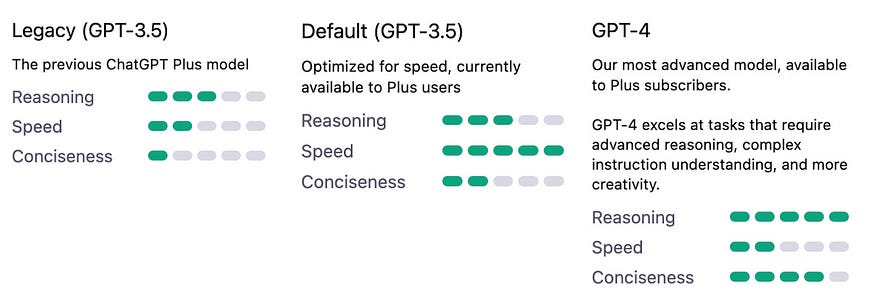
The AI industry has been revolutionised with the release of OpenAI’s GPT-4, which is brighter, multi-modal, and has improved logical reasoning skills. This has sparked a battle in the tech industry between Google and Microsoft, both developing their own AI models to compete with GPT-4.

GPT-4 can recognise texts and images, solve image-based problems, and has achieved human-like levels of common sense in reasoning. Its deep learning capabilities have also been improved, leading to an increase in professionals’ task completion time by 50% and improving output quality by 20%. The GPT series has gone from the bottom 10 to the top 10 performance level on standardised tests like the bar exam.

In this article, we will explore the capabilities of GPT-4 and its impact on the AI industry.

The Evolution of the GPT Series

The GPT series is a family of AI models developed by OpenAI that uses deep learning algorithms to generate human-like text. The first model in this series, GPT-1, was released in 2018 and had 117 million parameters. Its successor, GPT-2, released in 2019, had 1.5 billion parameters and achieved state-of-the-art performance in various natural language processing (NLP) tasks.

GPT-3, released in 2020, took the industry by storm with its 175 billion parameters and ability to generate human-like text with minimal prompting. Its multi-modal capabilities allowed it to perform various tasks, including translation, summarisation, and writing code.

The release of GPT-4 in 2023 has taken the GPT series to the next level. With its enhanced logical reasoning skills and the ability to recognise and interpret images, GPT-4 has set a new benchmark for the industry.

Smarter and Multi-Modal

GPT-4 is more innovative and versatile than its predecessors. It can perform various tasks, including recognising and interpreting images, solving image-based problems, and generating human-like text. This multi-modal capability is a significant step forward for the AI industry, as it allows machines to understand and process information like humans do.

The ability to process images is a particularly significant development. Machines can now analyse and interpret visual data, opening up various healthcare, manufacturing, and agriculture applications. For example, devices could analyse medical images to identify early signs of disease or monitor crop growth to detect potential problems.

Improved Logical Reasoning Skills

GPT-4 has also improved its logical reasoning skills, achieving human-like common sense levels. This is a significant development, as machines can now understand the context and make inferences based on that understanding.

The ability to reason logically has wide-ranging applications. For example, machines could analyse financial data and make predictions based on that data. They could also evaluate legal cases and make recommendations based on previous rulings.

Increased Productivity and Quality

GPT-4’s improved capabilities have increased professionals’ task completion time by 50% and improved output quality by 20%. This is a significant development, as machines can perform tasks more efficiently and accurately than ever.

This improved productivity and quality will likely be felt across various industries. For example, in the healthcare industry, machines can analyse medical images and detect potential problems more accurately than humans. This could lead to earlier diagnosis and better patient outcomes.

AI Battle in the Tech Industry

The release of GPT-4 has sparked a battle in the tech industry between Google and Microsoft. Both companies are developing AI models to compete with GPT-4 with Google’s model.

Backlinks:

Google

TechCrunch

Wednesday, April 12, 2023

How ChatGPT’s Mistakes Exposed Intellectual Bullshit: A Paradoxical Relationship

Mistakes made by ChatGPT in fields it knows well have led to a paradoxical relationship with intellectuals. On the one hand, ChatGPT’s errors have allowed users to gain a newfound respect for the chatbot’s honesty and vulnerability. On the other hand, it has led to a loss of respect for intellectuals who engage in dishonest tactics such as bullshit.

This article will explore how ChatGPT’s mistakes have led to this paradoxical relationship and the insights it provides into how intellectuals engage in bullshit.

I. ChatGPT’s Mistakes in Specialized Fields

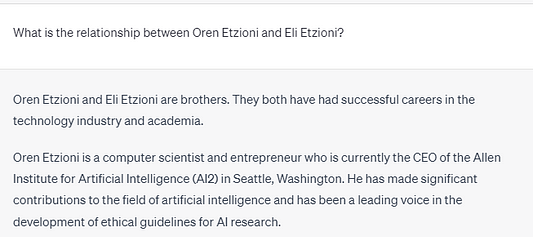
They are father and son.

ChatGPT’s mistakes in specialized fields such as history, literature, and politics have been well-documented. For instance, ChatGPT once claimed that “George Orwell” was a pen name used by a group of writers, even though George Orwell was a singular author. This mistake highlights the limitations of AI language models and their challenges in accurately representing complex information.

II. The Consequences of ChatGPT’s Mistakes

While ChatGPT’s mistakes may seem trivial, they have real consequences for users. Chatbots are increasingly used in customer service and other contexts where accuracy and reliability are critical. ChatGPT makes a mistake can lead to confusion, frustration, and a loss of trust in the chatbot.

III. Insights into Intellectual Bullshit

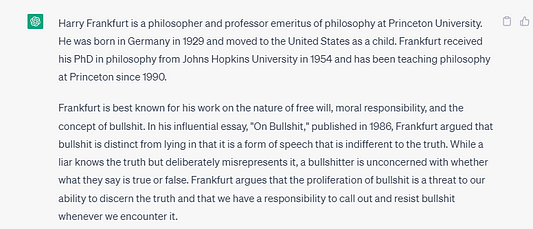
ChatGPT’s mistakes also provide valuable insights into how intellectuals engage in bullshit. Philosopher Harry Frankfurt defines bullshit as “speech intended to persuade without regard for truth”. Scholars often engage in bullshit by using jargon, obscurity, and other tactics to obscure the truth and manipulate their audience. ChatGPT’s mistakes, by contrast, are honest errors that expose the limitations of AI and the complexity of human knowledge.

IV. The Paradoxical Relationship between ChatGPT and Intellectuals

The relationship between ChatGPT and intellectuals is paradoxical because it flips the traditional power dynamic between humans and machines. In the past, engines were seen as tools humans could use to augment their knowledge and abilities. AI language models like ChatGPT now challenge that assumption by demonstrating their limitations and fallibility.

V. Conclusion

ChatGPT’s mistakes in specialized fields have led to a paradoxical relationship with intellectuals, exposing AI's and human knowledge's limitations. While these mistakes may frustrate users, they provide valuable insights into how scholars engage in bullshit. By embracing the vulnerability and honesty of AI language models, we can move towards a more nuanced understanding of knowledge and truth.

References:

Frankfurt, H. G. (1986). On Bullshit. Raritan Quarterly Review, 6(2), 81–95.

Tegmark, M. (2017). Life 3.0: Being Human in the Age of Artificial Intelligence. Penguin Books.

Adar, E., & Weld, D. S. (2019). Conversational agents and the Goldilocks principle: Analyzing the amount of work that is just right. ACM

Transactions on Computer-Human Interaction (TOCHI), 26(1), 1–24.

Miller, T. (2019). Explainability in artificial intelligence: Insights from the social sciences. Artificial Intelligence, 267, 1–38.

Howard, J. (2020). Brave New World Revisited: Aldous Huxley and George Orwell. The Atlantic.

Backlinks:

The Verge

Engadget