Tuesday, May 9, 2023

A Guide to Understanding Female Body Image Anxiety


Introduction

Body image anxiety is a common issue that affects many women. It is the feeling of dissatisfaction with one’s physical appearance and can lead to negative thoughts and behaviours. In today’s society, the pressure to look a certain way can be overwhelming, and many women feel the need to conform to unrealistic beauty standards. However, it is essential to understand that every woman’s body is unique, and no “perfect” body type exists. This article will explore misconceptions about female body image and provide helpful information to help women feel more confident and comfortable in their skin.

Misconception 1: Straight Legs are Better

Source from Instagram @sakura10h

Many women believe straight legs are more attractive, but this is not necessarily true. The human portion has two bones — the tibia and fibula — meaning the legs naturally curve outward slightly. This curve is standard and should not be a cause for concern. So, if you have somewhat curved legs, embrace them! They are perfectly normal and natural.

Misconception 2: Thin Ankles are a Must

Source from iStock

Another common misconception is that thin ankles are more attractive. However, if you have tiny feet, it is normal for your calves to be slightly thicker. This is because the muscles in your calves need to be more vital to support your body weight. So, if you have wider calves, it is nothing to worry about and should not be a cause for concern.

Misconception 3: Wide Hips are Unattractive

Source from WeChat

Many women are self-conscious about their hips, believing they are too broad. However, the truth is that the upper part of the thigh bone (femur) is naturally located slightly outward. This means that the hip area will naturally be wider in most women. This is perfectly normal and should not be a cause for concern. Having wider hips can be a sign of good health and fertility.

Misconception 4: Thigh Fat is Unhealthy

Source from Sina

It is a common belief that having fat on the thighs is unhealthy. However, this is only sometimes true. A little bit of fat on the thighs is normal and healthy. The fat in this area helps to protect the pelvic floor muscles and prevent injury. So, if you have a little bit of fat on your thighs, don’t worry! It is perfectly normal and healthy.

Misconception 5: Flat Stomachs are the Ideal

Many women believe that having a flat stomach is the ideal body shape. However, this is only sometimes true. A little fat on the stomach is perfectly normal and healthy. The fat in this area helps to protect the internal organs and prevent injury. So, if you have some fat on your stomach, don’t worry! It is perfectly normal and healthy.

Misconception 6: Perfectly Shaped Waistlines are Required

Many women believe that having a perfectly shaped waistline is essential. However, the truth is that the shape of your core is determined by genetics and cannot be changed. Some women have a more defined waist, while others have a straighter shape. Both shapes are normal and healthy, and no “perfect” waistline shape exists.

Misconception 7: Breasts Must be Perfectly Shaped

Zhou Dongyu is also a flat-chested girl. Source from Sina

Many women are self-conscious about their breasts, believing they are not perfectly shaped. However, the truth is that breasts come in all shapes and sizes, and no “perfect” body exists. Most women have slightly asymmetrical breasts. This is perfectly normal and should not be a cause for concern.

Misconception 8: Shoulder Blades Must be Hidden

Taylor shows her shoulder blades too. Source from Sina

Many women believe their shoulder blades should be hidden, but this is not necessarily true. The shoulder blades are part of the body’s natural structure and should not cause concern. If you have prominent shoulder blades, embrace them! They are perfectly normal and natural.

Misconception 9: A Perfectly Straight Neck Is Ideal

Yang Mi is still famous without a perfectly straight neck.

Many women believe that having a perfectly straight neck is ideal. However, the truth is that the shape of your neck is determined by genetics and cannot be changed. Some women have a longer neck, while others have a shorter neck. Both conditions are normal and healthy, and no “perfect” neck shape exists.

Misconception 10: Long Necks Are Ideal

Chen Yanxi, with a short neck, is also beautiful.

Many women believe that having a long neck is ideal. However, this is only sometimes true. Having a longer neck can increase the risk of neck pain and injury. So, if you have a shorter neck, don’t worry about it! It is perfectly normal and healthy.

Backlinks

“Body image — women”, Better Health, https://www.betterhealth.vic.gov.au/health/healthyliving/body-image-women

“Body image”, Office on Women’s Health, https://www.womenshealth.gov/mental-health/body-image-and-mental-health/body-image

“细长脖子VS粗壮脖子,哪一种更健康?”, Tencent, 16 Mar 2021, https://new.qq.com/rain/a/20210316A09YM800

Navigating the Debt Storm: Strategies for Tianjin to Manage Its Burgeoning Debt Burden


The Alarming State of Tianjin’s Debt

The rising debt burden in Tianjin is a matter of grave concern, and it is critical to understand the factors contributing to this worrisome trend. Several factors have led to the escalation of debt in Tianjin, including the city’s ambitious infrastructure projects, diminishing revenue from state-owned enterprises, and the need for increased social spending. The lingering effects of the COVID-19 pandemic have further strained the local economy, exacerbating the debt problem.

A Comprehensive Debt Strategy for Tianjin

To effectively manage its debt levels, Tianjin must adopt a comprehensive debt strategy, which can be achieved through the following steps:

Thorough debt audit: Conducting a rigorous debt audit to determine the composition of Tianjin’s debt, including the principal amount, interest rates, and maturity dates, is essential for designing effective debt management policies.

Debt restructuring: Exploring the possibility of debt restructuring to achieve more favourable terms and conditions, such as lower interest rates or extended repayment periods, could provide immediate relief for Tianjin’s debt burden.

Fiscal consolidation: Implementing budgetary consolidation measures, such as reducing non-essential expenditures, optimising public investment projects, and enhancing revenue collection, can improve Tianjin’s fiscal position and create a sustainable path for debt reduction.

Developing a medium-term debt management strategy (MTDS): Establishing an MTDS that outlines the government’s objectives, targets, and strategies for managing public debt over the medium term can provide a clear framework for policymakers and ensure consistency in decision-making.

Promoting Economic Growth and Revenue Generation

In addition to managing its existing debt, Tianjin must promote economic growth and increase revenue. This can be achieved through the following initiatives:

Diversifying the economy: Expanding the city’s economic base by promoting investment in new and emerging industries, such as technology, renewable energy, and advanced manufacturing, can help to create new sources of revenue and reduce reliance on traditional sectors.

Source of Data: 2022年天津市国民经济和社会发展统计公报

Encouraging private sector participation: Fostering an environment that promotes private sector investment through regulatory reforms and business-friendly policies can stimulate economic growth and create employment opportunities.

Enhancing trade and regional integration: Pursuing trade opportunities and deepening regional integration by forging new trade agreements and participating in regional economic initiatives can open up new markets for Tianjin’s goods and services, thereby boosting its economy.

Learning from International Best Practices

As mentioned earlier, the issue of sovereign debt is common to Tianjin, and many countries worldwide are facing similar challenges. Thus, Tianjin needs to learn from the experiences of other countries and implement best practices in managing its debt levels. Some examples of international best practices include:

The United Kingdom’s Office for Budget Responsibility (OBR) provides independent assessments of the country’s public finances and ensures transparency in fiscal policy.

The United States Government Accountability Office (GAO) promotes accountability in government spending and provides analyses, recommendations, and reports to help Congress make informed decisions.

The European Union’s Stability and Growth Pact (SGP) establishes fiscal rules and guidelines for member states to ensure sound public finances and prevent excessive government deficits.

Backlinks

“如何看经济转型中的天津市城投?”, 27 Mar 2023, Vzkoo, https://www.vzkoo.com/document/2023032781f875b3cb14f8c25a651873.html

“地方政府与城投企业债务风险研究报告:天津篇”, 08 Feb 2023, Sina https://stock.finance.sina.com.cn/stock/go.php/vReport_Show/kind/lastest/rptid/729156828358/index.phtml

“China’s cities are on the verge of a debt crisis”, 27 Feb 2023, The Financial Times, https://www.economist.com/finance-and-economics/2023/02/27/chinas-cities-are-on-the-verge-of-a-debt-crisis

“工业和建筑业概况”, 天津市政府网, 17 Mar 2023, https://www.tj.gov.cn/sq/tjgk/jjjs/gygk/

The Importance of Maintaining Boundaries in Parent-Child Relationships


Introduction

As the saying goes, “When a son grows up, he should avoid his mother; when a daughter grows up, she should avoid her father.” This implies parents must step back at the appropriate time and give their children more personal space. Overstepping the boundaries of parent-child relationships may cause harm to the child. In reality, many parents, due to excessive pampering, often neglect these boundaries, leading to situations where children are hurt.

Overstepping Boundaries Due to Excessive Pampering Can Hurt Children

Source from Shutterstock

A father once deeply loved his daughter and treated her like his “little cotton-padded jacket.” He cared for almost everything for her, from putting her to sleep, bathing her, and changing her clothes, except for breastfeeding. At first, the mother thought the father was very fond of their daughter, and since the child was still young, she didn’t mind. However, as the girl grew up, the father continued to bathe and dress her daily, even sharing the bed with her, making the mother very uncomfortable.

The mother tried several times to discuss with her husband that their daughter was growing up and needed some distance, but the father was unhappy, thinking, “What’s wrong with loving my daughter?” Later, as the girl entered adolescence and began living at school, the situation improved. However, when the girl was 16, her mother discovered something unusual about her daughter’s belly while changing her clothes. The mother quickly took her daughter to the hospital for a checkup, and the results shocked both parents — the girl was pregnant!

Under her parents’ questioning, the girl finally revealed the truth. She secretly had a boyfriend at school who treated her very well, just like her father. The girl felt “fatherly warmth” from her boyfriend, and they soon became intimate. The regretful father realized that his lack of boundaries in loving his daughter had led to this situation, and the harm caused to her was irreparable.

The Warning of the Stories

This story serves as a warning to all parents: do not assume children are too young to understand. Children become aware of gender differences around the age of three, curious about the differences between their own and their parents’ bodies. Therefore, in everyday life, parents should be cautious about maintaining boundaries in various situations.

Backlinks

“Teaching Kids About Boundaries”, Child Mind Institute, 27 Apr 2023, https://childmind.org/article/teaching-kids-boundaries-empathy/

“The Importance of Setting Boundaries in Effective Behavior Management for Children”, 26 Apr 2023, https://www.refersms.com/the-importance-of-setting-boundaries-in-effective-behavior-management-for-children/

“The Importance Of Setting Boundaries: Ten Benefits For You And Your Relationships”, Betterhelp, 19 Apr 2023, https://www.betterhelp.com/advice/general/the-importance-of-setting-boundaries-10-benefits-for-you-and-your-relationships/

Sunday, May 7, 2023

China’s Generative AI: The Challenge of Regulation


Bloomberg Creative/Getty Images

China’s tech giants have showcased their artificial intelligence (AI) models, which can power products and applications such as image generators, voice assistants, and search engines. These new offerings include Ernie Bot, SenseChat, and Tongyi Qianwen. However, AI poses a challenge for China’s rulers, as the generative type holds excellent promise for Chinese tech firms but opens up vast new ways for information to spread outside its control. The Communist Party of China defines the truth, and generative AI may challenge this control.

Proposed AI Regulations in China

The government’s concerns are reflected in the rules proposed by China’s internet regulator on April 11th. According to the Cyberspace Administration of China (CAC), firms should submit a security assessment to the state before using generative AI products to provide services to the public. Companies would be responsible for the content that such tools generate. The content must not subvert state power, incite secession, harm national unity, or disturb the economic or social order. Those restrictions may sound arcane, but similar rules, applied to the internet, let the party repress speech about everything from Uyghur rights to democracy, feminism, and gay literature.

China’s Approach to AI Regulation

China’s approach to AI regulation appears more piecemeal and reactionary than other countries. The EU has proposed a law that categorizes different uses of AI and applies increasingly stringent requirements according to the degree of risk. China’s control of the internet has not stifled innovation. Still, when it comes to generative AI, it is difficult to see how a Chinese company could create something as wide-ranging and human-like as Chatgpt while staying within the government’s rules.

Source from European Commission

The arbitrary nature of the CAC’s proposed rules means it can tighten or loosen them as it sees fit. In recent years, companies in fields such as e-commerce, social media, and video gaming have had to rethink their business models based on the whims of President Xi Jinping. If Xi does not like where generative AI is going, he could reset that industry too.

Potential Limitations on Chinese AI Firms

One way Chinese AI firms may be held back is by limiting the personal data made available to train their AI models. Until recently, China’s tech companies could hoover up personal data. However, this freewheeling era seems to be coming to an end. Companies wanting to use certain types of personal data must, in theory, obtain consent. Under the draft rules on AI, firms would safeguard users’ personal information.

Conclusion

In conclusion, generative AI holds great promise for Chinese tech firms but challenges China’s rulers. The government’s proposed rules make clear its concerns about the potential for information to spread outside its control. The arbitrary nature of these rules means that the government can tighten or loosen them as it sees fit. The personal data available to train AI models may also be limited, which could hold back Chinese AI firms.

Backlinks

“重磅!刚刚,中国AI监管规定出炉!拜登也有大动作”, STCN, 11 Apr 2023, https://www.stcn.com/article/detail/838135.html

“ChatGPT:风起云涌的生成式AI和紧随而至的监管 从中国网信办新规看新赛道走向”, BBC News, 14 Apr 2023, https://www.bbc.com/zhongwen/simp/chinese-news-65274804

“How will China’s Generative AI Regulations Shape the Future? A DigiChina Forum”, Stanford University, 19 Apr 2023, https://digichina.stanford.edu/work/how-will-chinas-generative-ai-regulations-shape-the-future-a-digichina-forum/

“Proposal for a Regulation laying down harmonised rules on artificial intelligence”, European Commission, 21 Apr 2021, https://digital-strategy.ec.europa.eu/en/library/proposal-regulation-laying-down-harmonised-rules-artificial-intelligence

The Potential for Improving User Experience: Large Models in the Travel Industry and Future Scenarios

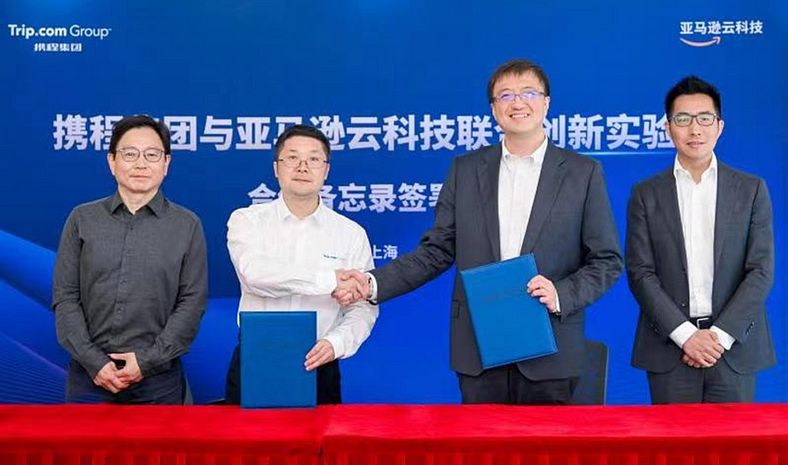
Source from 澎湃

Introduction

The travel industry has undergone significant changes in recent years, with technological advancements and the rise of digital platforms. With competition increasing, providing a good user experience has become essential for travel companies to retain customers. Large models, also known as artificial intelligence models, have shown immense potential to improve user experience in the travel industry. This article will explore the possibility of large models to enhance user experience in the travel industry and discuss future scenarios for the industry.

Large Models in the Travel Industry

Source from Sina

Large models refer to artificial intelligence models trained on large amounts of data to learn patterns and make predictions. In the travel industry, large models can be used for various purposes, such as predicting flight delays, optimising pricing strategies, and enhancing personalisation. The advantages of using large models in the travel industry include improved accuracy in predicting customer behaviour, increased efficiency, and reduced costs. However, some disadvantages exist, such as the need for significant computing power and data storage, which can be expensive.

Several successful implementations of large models in the travel industry exist. One example is the use of chatbots for customer service. Chatbots can provide 24/7 support to customers, and they can use large models to learn from previous interactions to improve their responses. Another example is using predictive analytics to personalise travel recommendations based on customer preferences and behaviour.

Improving User Experience through Large Models

Personalisation is a critical factor in improving user experience in the travel industry. Large models can personalise travel recommendations based on customer preferences, such as destination, accommodation, and activities. Real-time data and personalised recommendations can improve customer satisfaction and loyalty. For example, large models can analyse weather patterns and give customers personalised advice for indoor activities during inclement weather.

Large models can also enhance safety and security in the travel industry. For instance, large models can analyse patterns of fraudulent activity and identify potential security threats. Large models can also analyse data from various sources, such as social media and news reports, to provide real-time alerts to travellers in emergencies.

Future Scenarios in the Travel Industry

The potential for large models in the travel industry is vast, and the future scenarios for this technology are exciting. Here are two specific examples of how large models could be used to improve the user experience in the travel industry.

During the holiday or other peak travel periods, many popular tourist destinations become overcrowded, leading to long lines and frustrating experiences for travellers. To address this issue, large models could be used to analyse real-time booking data and search data to identify less crowded destinations for travellers to visit. The AI could recommend these destinations to travellers, allowing them to avoid crowds and enjoy a more relaxing trip. This would improve the traveller’s experience and help distribute tourism more evenly, reducing the strain on overcrowded destinations and promoting sustainable tourism.

Source from altexsoft

Another scenario where large models could be used to improve user experience is in the hotel booking process. Travellers often face challenges finding the right hotel for their needs, particularly when travelling with children, seniors, or individuals with disabilities. In this scenario, large models could analyse the traveller’s background information and preferences to recommend suitable hotels based on location and surrounding attractions. The AI could also use real-time data to predict foot traffic around the hotel and nearby attractions, helping travellers make informed travel plans.

In addition to these scenarios, the travel industry will likely see continued innovation in virtual reality, blockchain, and big data. These technologies have the potential to revolutionise the industry and provide travellers with even more personalised and immersive experiences.

Conclusion

In conclusion, large models have significant potential to improve user experience in the travel industry. They can be used for personalisation, real-time data analysis, and enhancing safety and security. The future of the travel industry is likely to be shaped by technological advancements such as virtual reality, blockchain, and big data. However, the industry will face sustainability concerns and increased competition from sharing economy platforms. The travel industry must embrace large models and other new technologies to stay ahead of the competition and provide a good user experience.

Reference

“They will be more likely to survive and thrive. As an ex-strategy consultant and public speaker on digital and technology trends, and now running venture-backed, travel-tech startup Beyonk, here …” https://www.forbes.com/sites/forbesbusinesscouncil/2021/12/27/the-travel-and-tourism-industry-by-2030/

“This desire to build memories, to connect with people, and to see new places drove 1.4 billion of us to travel internationally in 2019. 1 Creating safer travel experiences is now paramount to protect this privilege. Now is a moment of crisis for the travel industry. Available seat miles on US airlines were down 71 per cent in April 2020 …”https://www.mckinsey.com/industries/travel-logistics-and-infrastructure/our-insights/make-it-better-not-ust-safer-the-opportunity-to-reinvent-travel

“亚马逊云和携程成立联合创新实验室,探索大模型落地旅行应用”, 26 Apr 2023, The Paper, https://www.thepaper.cn/newsDetail_forward_22863250

“Share of travellers trusting to use Artificial Intelligence (AI) to plan travel in 2033 worldwide as of August 2022, by travel aspect”, February 2023, Statista, https://www.statista.com/statistics/1381319/expected-use-artificial-intelligence-for-travel-planning-worldwide/